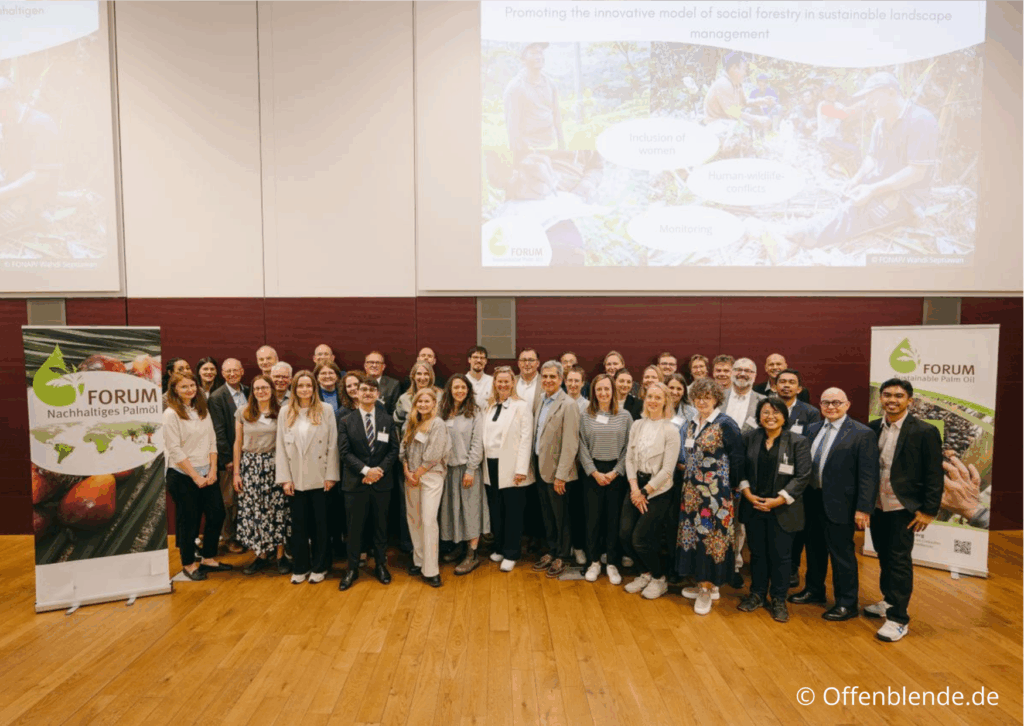

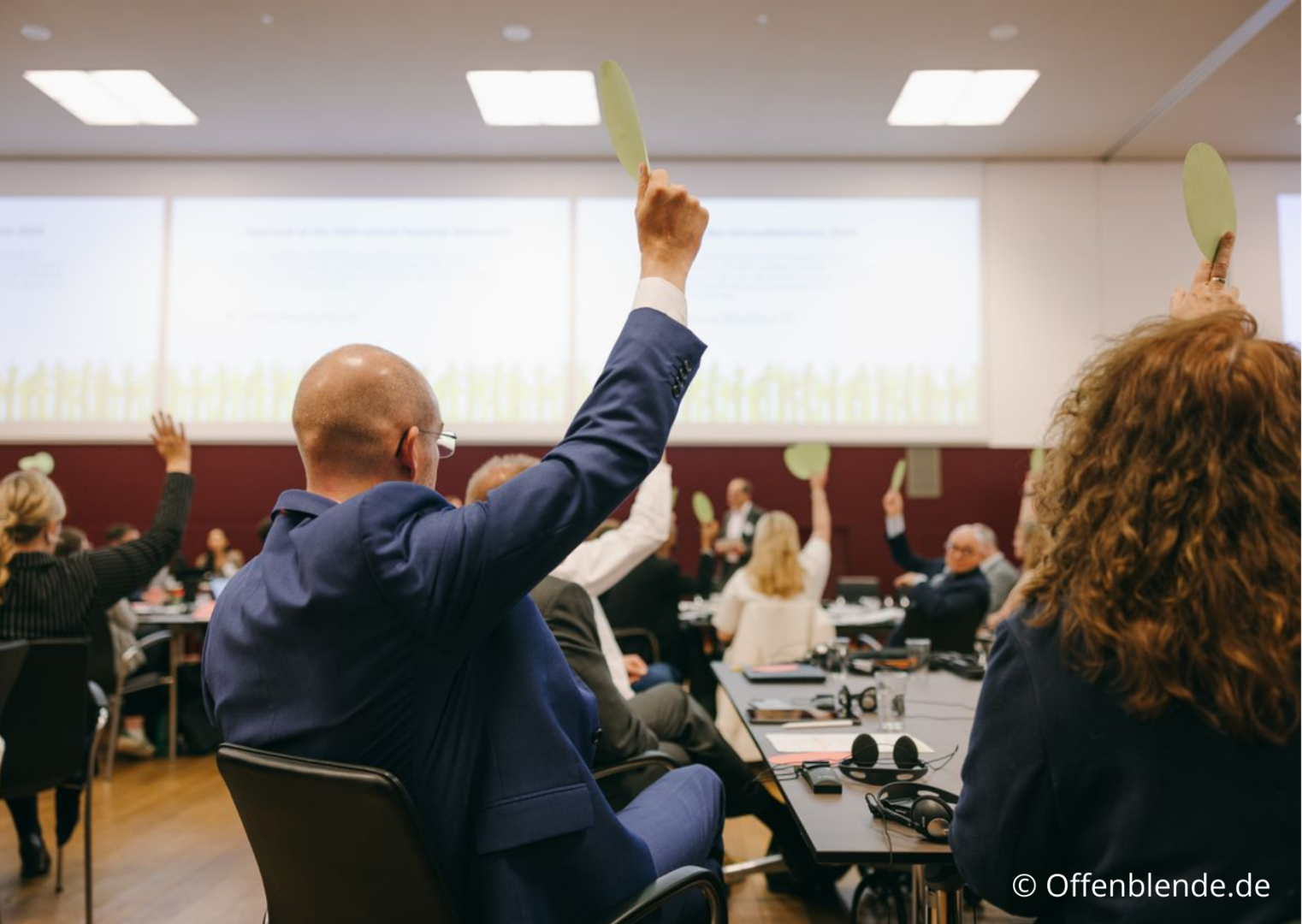
This year’s General Assembly took place in Berlin on 29 April. With speakers from Malaysia, Indonesia, the USA and Europe, it was particularly international this time.
Call for a paradigm shift
On the premises of the Federal Ministry for Economic Cooperation and Development, Paul Garaycochea, Head of Sub-Directorate for sustainable supply chains, agricultural and food systems, took a look at the current challenges and opportunities in sustainable palm oil production. Dr. Eckard Heuer, Head of Sub-Directorate for forest and hunting policy, sustainability at the Federal Ministry of Food and Agriculture, focused in particular on current developments in deforestation-free supply chains and FONAP’s valuable contribution to promoting the achievement of these objectives.
In his keynote speech, Professor Dr. Alain Rival from the Centre de coopération internationale en recherche agronomique pour le développement (CIRAD) called for a paradigm shift for palm oil production systems. Cultivation must adapt to climate change and focus much more on biodiversity. In this context, Professor Rival favours concerted action in landscape contexts and advocates more complex agroforestry systems with a diverse plant community. As evidence, he brought along results and findings from field research projects in numerous countries. Women and local communities should also benefit more.
On an exciting panel, Alain Rival discussed with Reza Azmi (Wild Asia), Charlotte Opal (Earthworm Foundation) and Jutta Stute (BASF) how such a paradigm shift can succeed in practice. It became clear that dialogue and cooperation remain indispensable for this. Lessons learnt in particular should be shared more widely and taken into account. It is also important to emphasise the added economic value – the business case – for innovations.
Insights from Malaysia and Indonesia
A special highlight was a presentation by Sabarudin, Chairman of the Indonesian smallholder organisation Serikat Petani Kelapa Sawit (SPKS). It is becoming increasingly difficult for certified cooperatives to profit from their certification through the sale of Independent Smallholder Credits. The certificate market, which was previously so central to smallholder organisations, has basically collapsed. There is also currently a discussion within RSPO about not allowing any more smallholder communities and cooperatives to apply for new and initial certifications until successful buyers have been found for the existing certified volumes from smallholder structures. (Technically, there is probably talk of a moratorium.) Long supply chains remain a challenge overall.
Board members Sascha Tischer and Reza Azmi reported on FONAP projects on the ground.
Honorary awards for the tenth anniversary
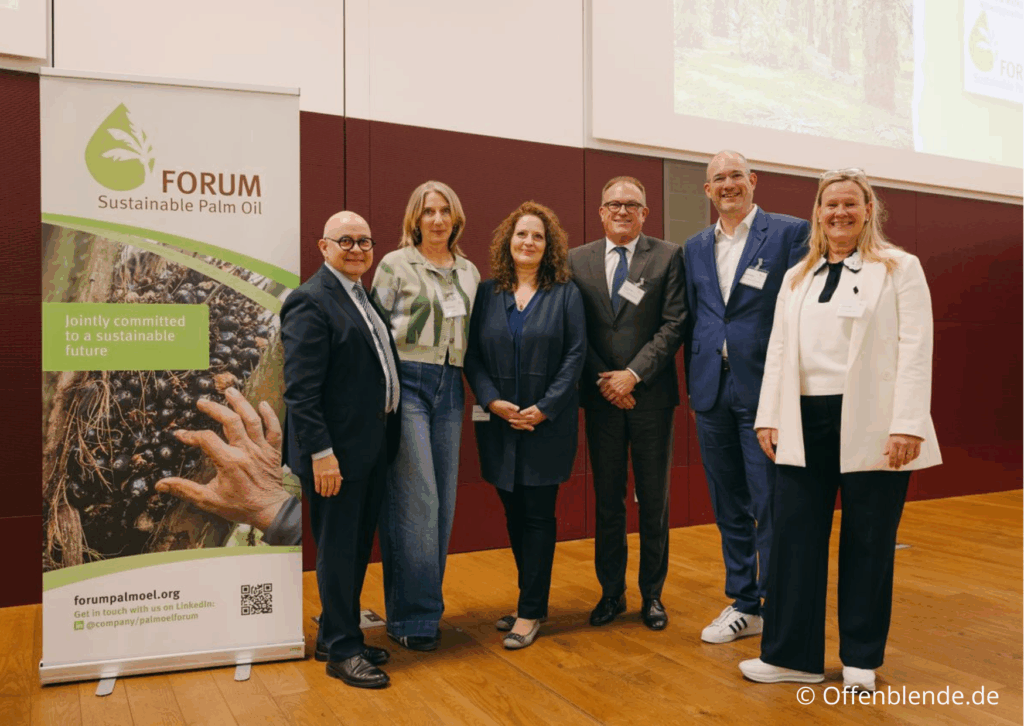
On 11 November 2015, FONAP e.V. became an association after two years of informal cooperation. In this anniversary year, the board thanked personalities who have helped shape FONAP from the very beginning – and thus even before the association was founded: Ilka Petersen from WWF, Stefanie Schönherr from dm and the brothers Daniel and Markus Nölken from Nölken Hygiene Products.
Setting the course for FONAP
As every year, the General Assembly discussed and made decisions on a whole range of motions, draft resolutions and relevant topics for the continued successful organisation and management of the association. This year, in addition to budget planning, two special topics were on the agenda: an adjustment to the self-commitment to promote organic palm oil and a reorganisation of the FONAP Secretariat. The latter will be taken over by the Global Nature Fund (GNF) in future. Managing Director Stefan Hörmann and colleague Gudrun Schlöpker were on site and introduced themselves to the members before the upcoming vote. All topics, motions and draft resolutions were adopted with the required majority.
Almut Feller emphasised once again that FONAP will continue to expand national and international partnerships and networks and maintain every important exchange. It is about inclusion, good approaches – which have a long-term effect – and efficient knowledge transfer with the support of science. Which formats and collaborations are suitable for this will be developed by FONAP in the coming months. – The Chair summarised the day succinctly and thanked all the speakers for their valuable input, Professor Christian Thorun for moderating, the participants for their active engagement and the Federal Ministry for Economic Cooperation and Development for providing the premises.
More information will follow!