

Member Project Malaysia
THE FONAP PROJECT PHASES – OVERVIEW
Cooperation with Wild Asia and WWF
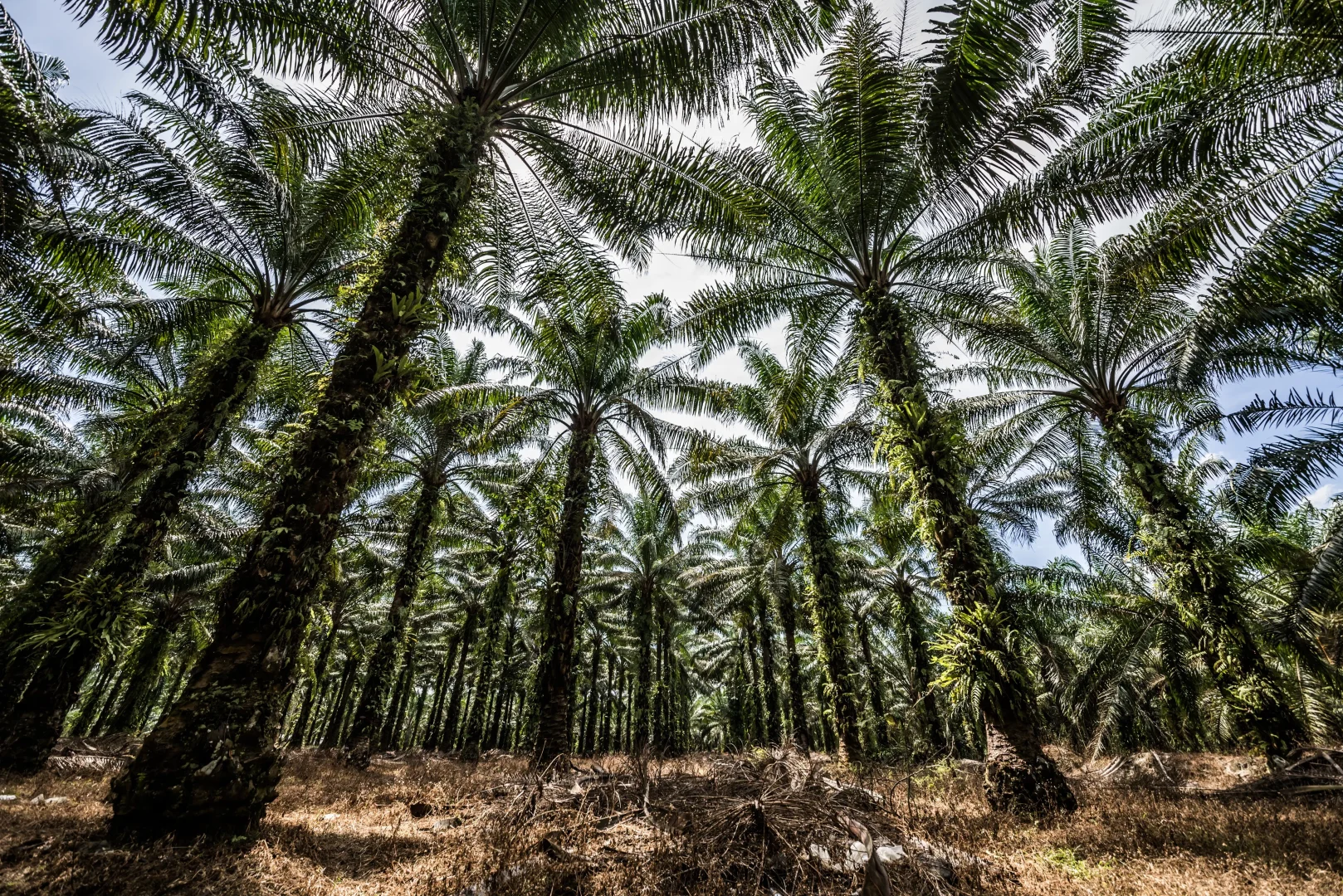
Through various measures, the members organized within FONAP actively support the promotion of ecologically and socially more compatible cultivation methods in the countries of origin. The focus of 2018 was the start of the FONAP member project in Malaysia, a cooperation between FONAP, WWF Germany, and Wild Asia. In the Perak region, smallholders tested the feasibility of the FONAP add-on criteria, including, for example, the reduced use of pesticides.
The Malaysian non-governmental organization Wild Asia has extensive training expertise in the field of ecologically and socially more compatible palm oil cultivation and was cooperating with 335 smallholders at the time. The Wild Asia Group Scheme (WAGS) was founded in 2012. Within the framework of this program, Wild Asia works with independent smallholders to support them in improving their agricultural practices and complying with national and international
standards (such as the legally regulated Malaysian Sustainable Palm Oil (MSPO) and Round Table on Sustainable Palm Oil (RSPO)). A smallholder is defined as someone with less than 40 hectares of cultivation area available. WAGS is also a community development initiative designed to improve the livelihoods of small producers by increasing yields and ensuring access to the international market for certified palm oil.
THE FIRST PHASE OF OUR SMALLHOLDER PROJECT
Testing the FONAP Add-on Criteria
Project Phase I
-
When
July 2018 to June 2019
-
Who
FONAP Cooperation with WWF and Wild Asia (Malaysia)
-
Where
Perak Region/Malaysia
-
What
A dozen smallholders test the applicability and practical feasibility of the FONAP add-on criteria
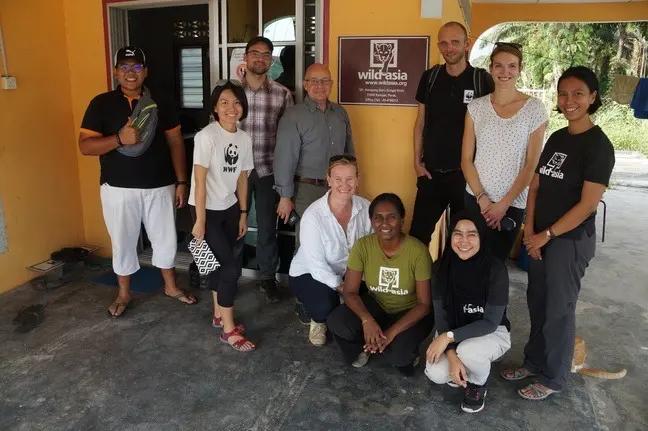
The FONAP-WWF-Wild Asia Cooperation
Impact of the FONAP Add-on Criteria on Small Producers in Malaysia” – This was the title of Phase I of our first pilot project in Malaysia. A cooperation between FONAP, WWF Germany, and the non-governmental organization Wild Asia. All FONAP members provided financial support for the first phase.
In 2017, FONAP developed add-on criteria for ecologically and socially more compatible palm oil production. These include reduced use of pesticides and better soil fertility. In one part of the project, smallholders from the Perak region of Malaysia tested the applicability and practical feasibility of the FONAP add-on criteria in their small businesses. The first phase lasted from July 2018 to July 2019. During the project period, our cooperation partner Wild Asia trained and monitored the smallholders.
The most important results of Phase 1:
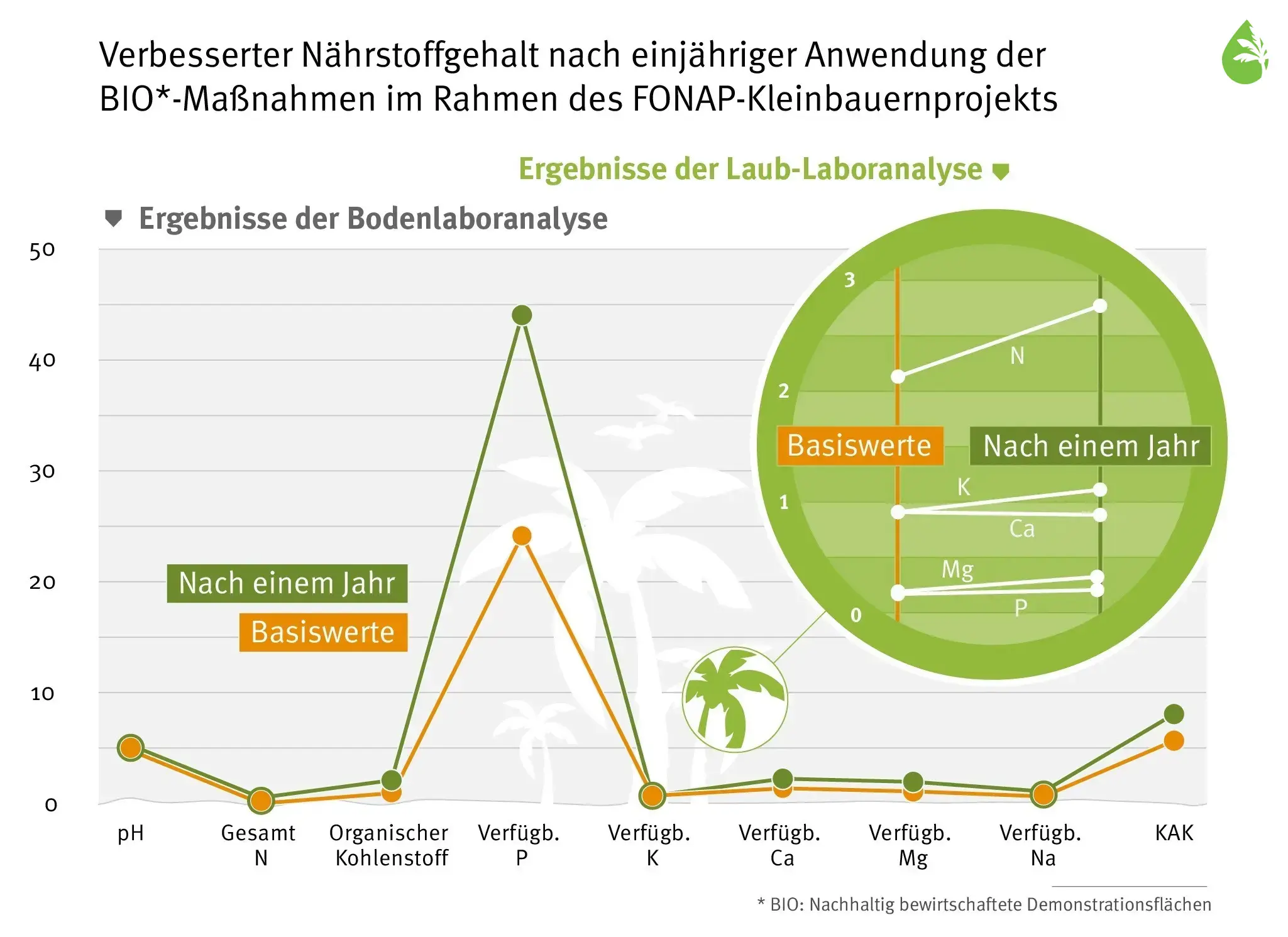
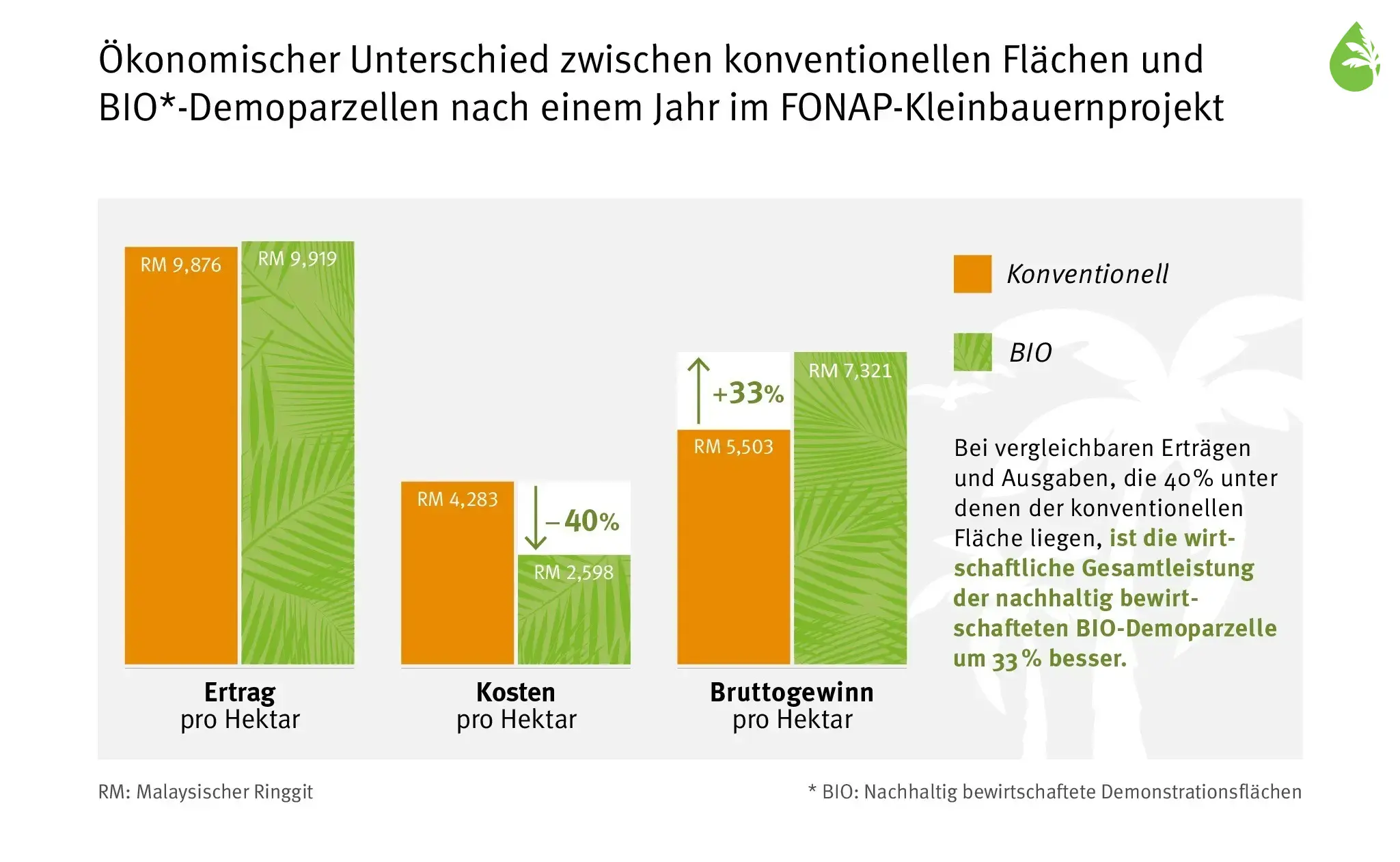
The FONAP smallholder project has contributed to the participating smallholders developing a better understanding of the importance of biodiversity on and in their soils. The small producers have shown that organic production without the use of pesticides is possible and can even lead to higher yields. Initial evidence was also collected showing that crop diversification can have a positive effect on soil fertility and income. In the process, dependencies on synthetic fertilizers/pesticides can be reduced, paving the way for organic production in the medium to long term.
Participating Smallholders
What do the smallholders say about the first project phase?
Meet four of the participating plantation owners here.
-
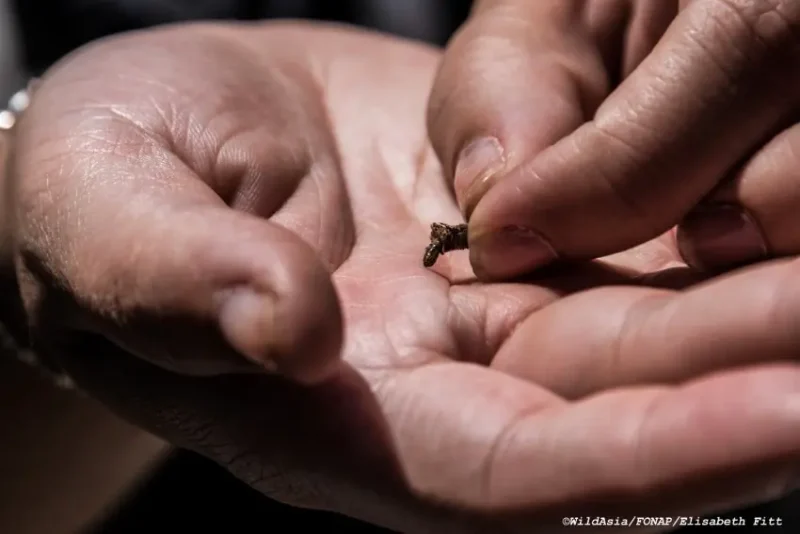
This annoying opponent is barely a centimeter long. “I try to keep my farm as free of pesticides as possible. I have always avoided chemicals. For the sake of my health alone!” Mr. Chong has been working sustainably for a long time, not just since he became RSPO certified. -
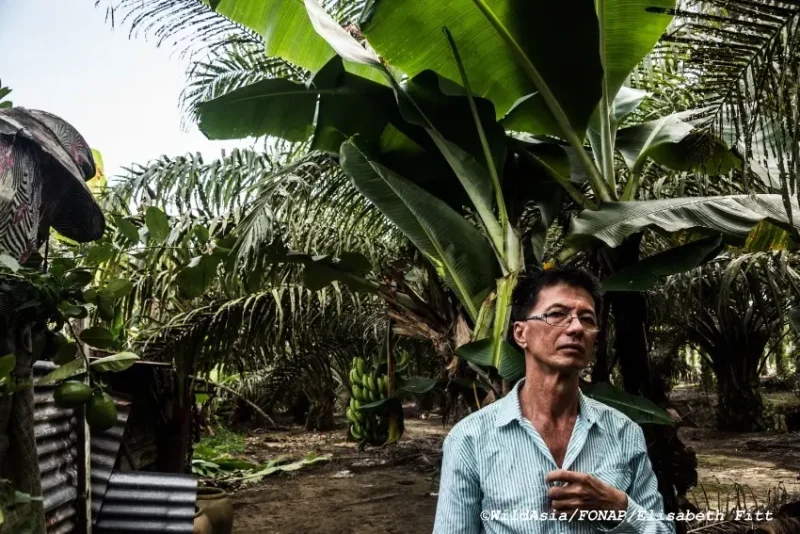
Mr. Chong’s small farm is like a mixed forest. He plants flowers, which in turn attract ground beetles. Ground beetles are the greatest enemies of the bagworm. Furthermore, bananas, pineapples, sugar cane – and even Chinese medicinal herbs – sprout on his land. He thus gets the maximum out of his 1.6 hectares while simultaneously ensuring greater biodiversity. -
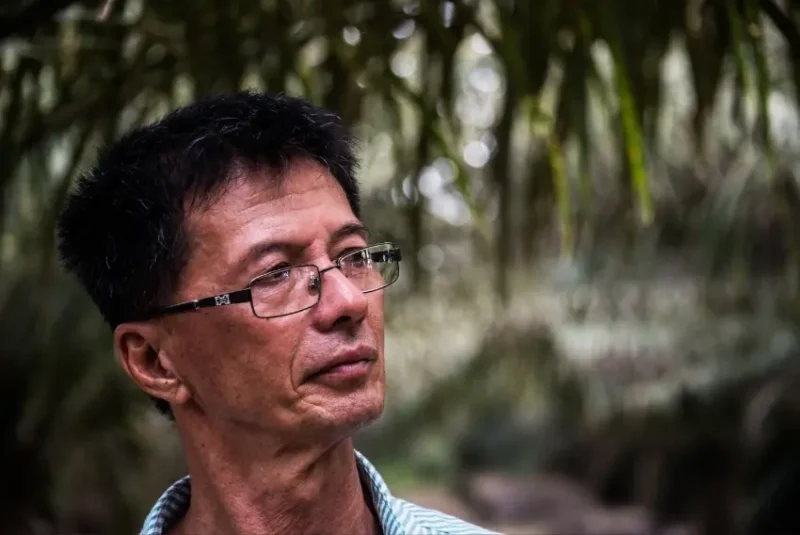
I am grateful for the training from Wild Asia, which has helped to deepen my knowledge in the field of oil palm cultivation. -
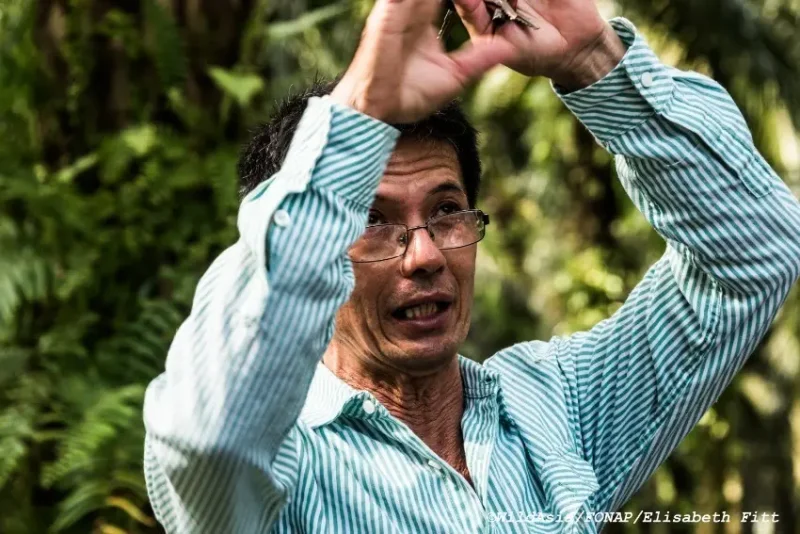
Five years ago, Mr. Chong decided to give up rubber cultivation and focus on palm oil. Why? Because it is difficult to find farm workers in this region, says the 57-year-old: “Rubber has to be tapped every day. That is very labor-intensive. Palm oil, on the other hand, is ideal. We only harvest every 20 to 25 days!”
-
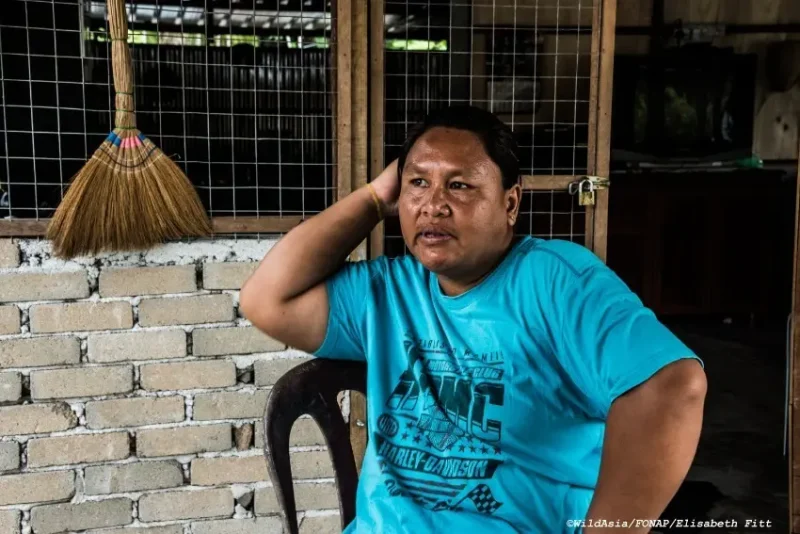
Ms. Dongkin is proud of her harvest record: In the best season, she harvests around 20 tons of fruit bunches a year. In the bad season, it is still around 16 tons. “It’s hard work – you go out very early in the morning and come back late in the evening. My children haven’t indicated yet whether they want to put themselves through that.” But Ms. Ramnumkin’s biggest problem: paying the farm workers, because even smallholders need help with the physically demanding harvest. -
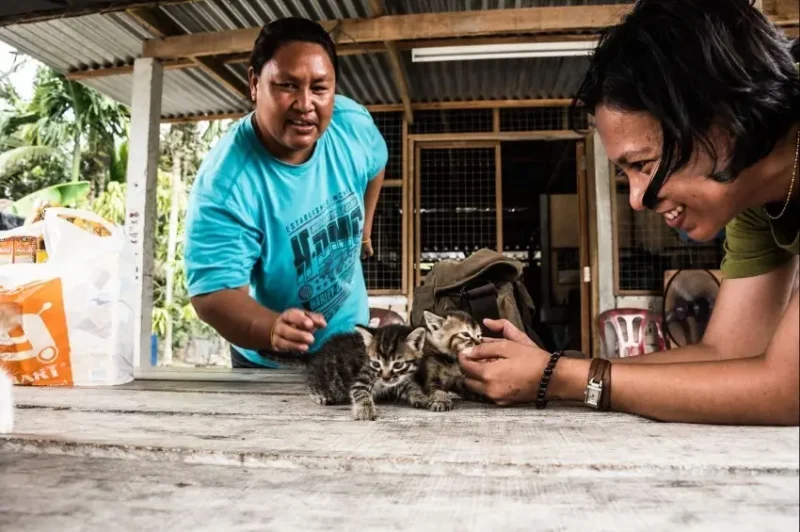
Through my cooperation with Wild Asia, I have received technical support regarding the correct handling of chemicals and the application of fertilizers. I spray less now. That is also more cost-effective. I draw a positive conclusion. -
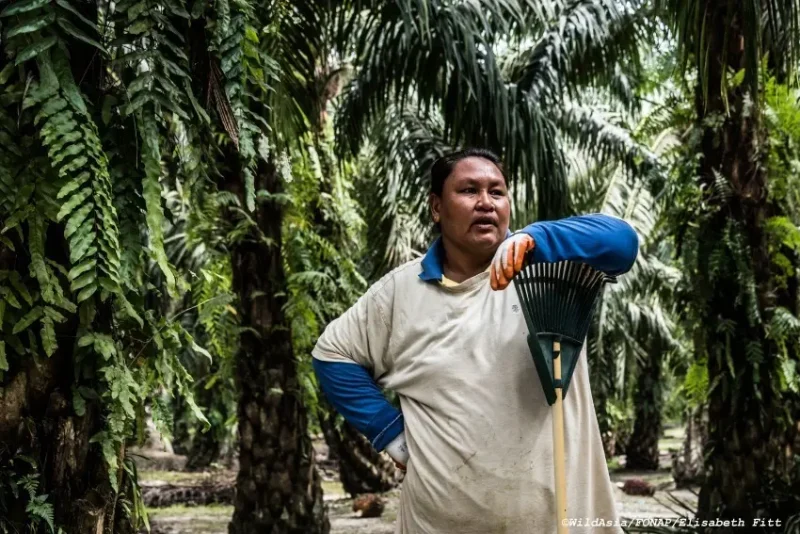
Farmer Herzuza Dongkin rules over five hectares of palm oil forest. The 38-year-old’s medium-term goal is RSPO certification. “I used to think weeds were bad. That’s why I sprayed a lot of pesticides. But Wild Asia convinced me that it’s good if the ground around the palms is covered with vegetation. This helps to retain moisture, for example.” -
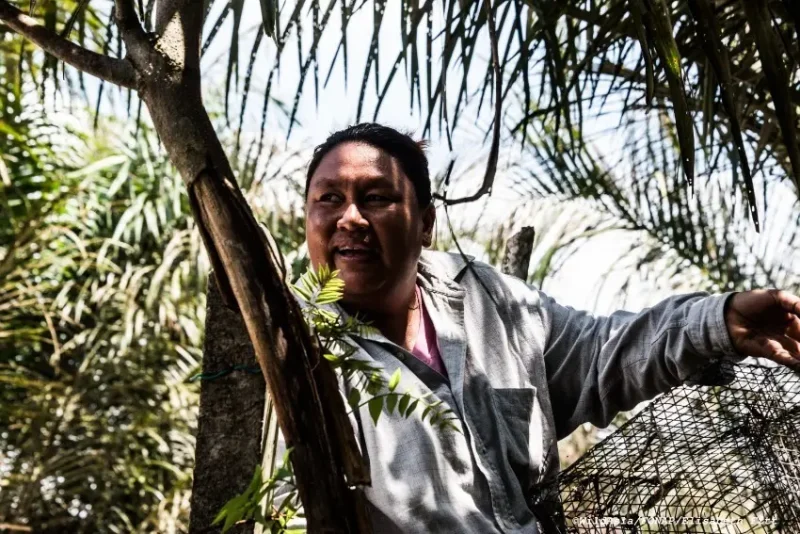
Since she started working with Wild Asia, she has largely dispensed with pesticides. This doesn’t just benefit the oil palm – but also the fish! She sets traps in the irrigation channels. She uses palm oil fruits as bait. “We save money by fishing! We also grow all kinds of vegetables here. So we can eat healthily, even though we earn less than 2000 RM* a month.” *Equivalent to approx. 440 euros -
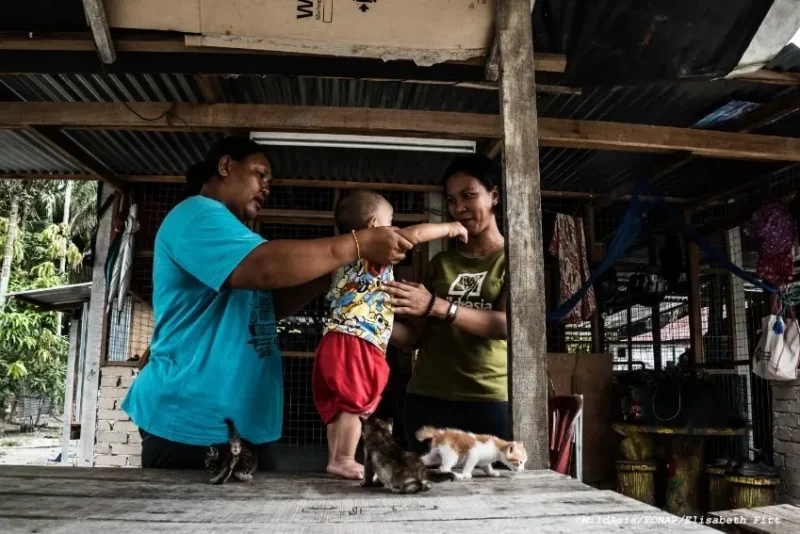
Ms. Dongkin has been running her farm for ten years. When she started 10 years ago, she found a neglected plantation. Her predecessors tried rice, the next ones rubber. “We had to do everything by hand: hack away the brush and create channels. We had no money for machines.” But the work was worth it. Besides the house and farm, her family is her greatest treasure. And there is fresh fish almost every day.
-
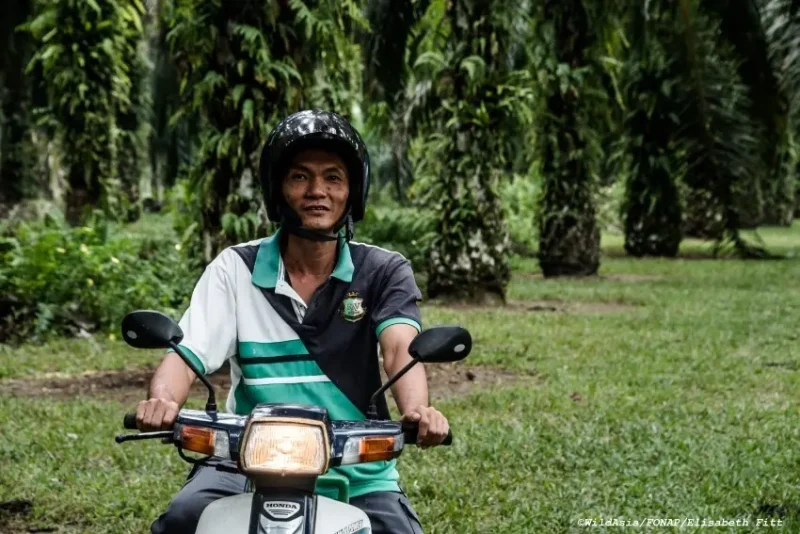
Neoh Ah Sang visits his two palm oil plantations by moped. He inherited them from his mother. The plantations are his only livelihood. “When things are going well, I earn around 1500 RM* monthly. But I never fall below the 1000 RM limit. That’s good!” Mr. Neoh also avoids pesticides. To fight the bagworm, he has sown grass everywhere. “The caterpillar comes mainly during dry spells. The grass keeps the soil moist and the parasite stays away. I mainly have to make sure my lawnmower works properly.” *Equivalent to approx. 320 euros -
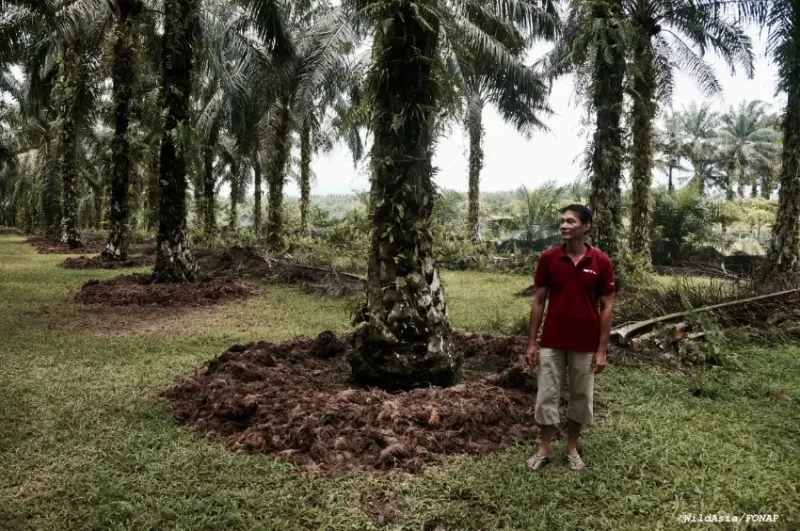
With the help of Wild Asia, the 47-year-old is learning new fertilization methods. On his second plantation, Mr. Neoh has been experimenting with natural fertilizer for several months: a mixture of fibers and animal manure. Mr. Sang also buys an organic fertilizer. “Since I started using it, my harvest has doubled in the last four months.” -

The only downside, according to Neoh Ah Sang: “A 10-liter canister costs 168 RM*. That is my biggest expense. But since my soil is getting better and better, I need fewer and fewer of the canisters. Until two years ago, I only used artificial fertilizer. Back then, I harvested around two tons of fruit bunches per month. Also, the trees kept dying. Now I average 4 tons, sometimes even 7 tons per month. Experimenting pays off!” *Equivalent to approx. 36 euros -
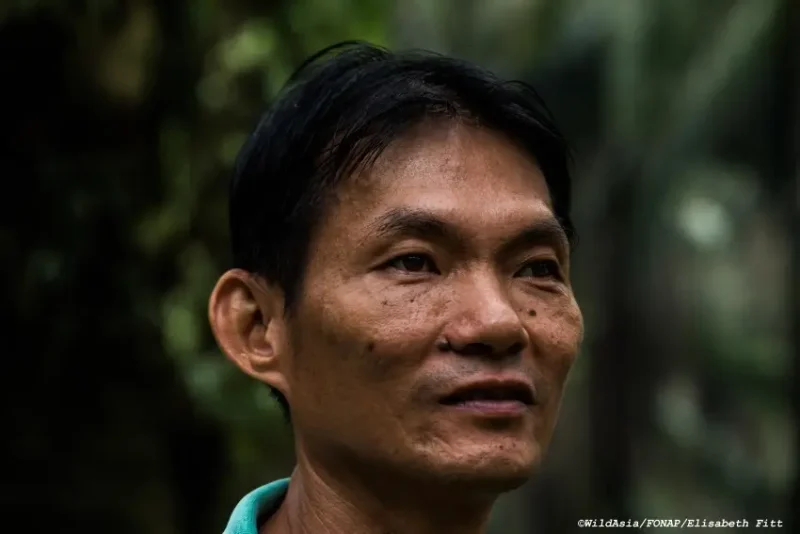
Mr. Neoh is aiming for RSPO certification. On the one hand, he can save money with effective cultivation methods. But what particularly appeals to him: “I want the RSPO certificate because there is a great demand. The buyers want sustainable goods!” -
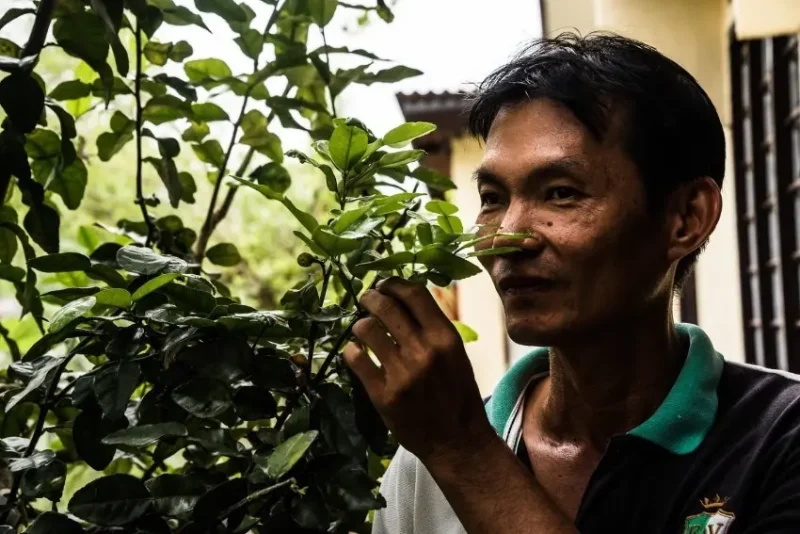
I have not only reduced production costs by about 30%, but my yields have also increased to an average of 4 tons per hectare, compared to 1 to 2 tons in recent years. My soils are healthier now – for example, the leaves are large and bright green.
-
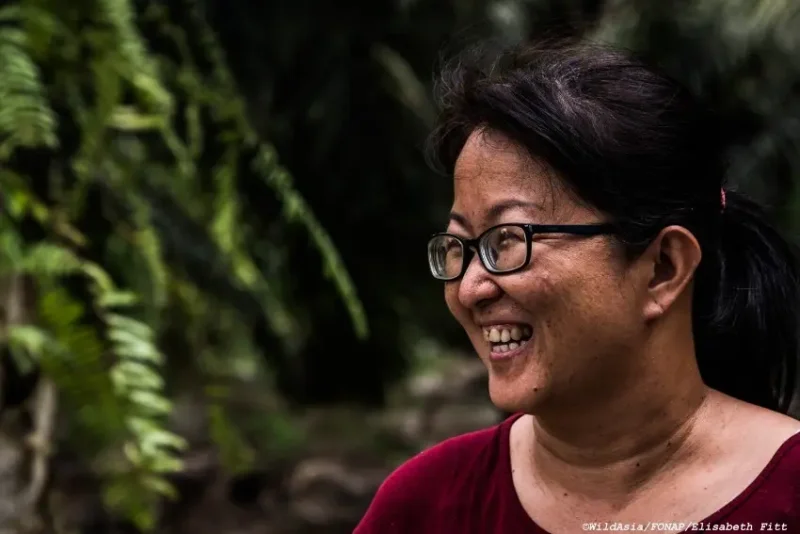
Tiam Su Goi helps her husband on the family oil plantation. The 46-year-old watches over the numbers in the Tiam household. She keeps the business books. From production figures to expenditures for fertilizer. -
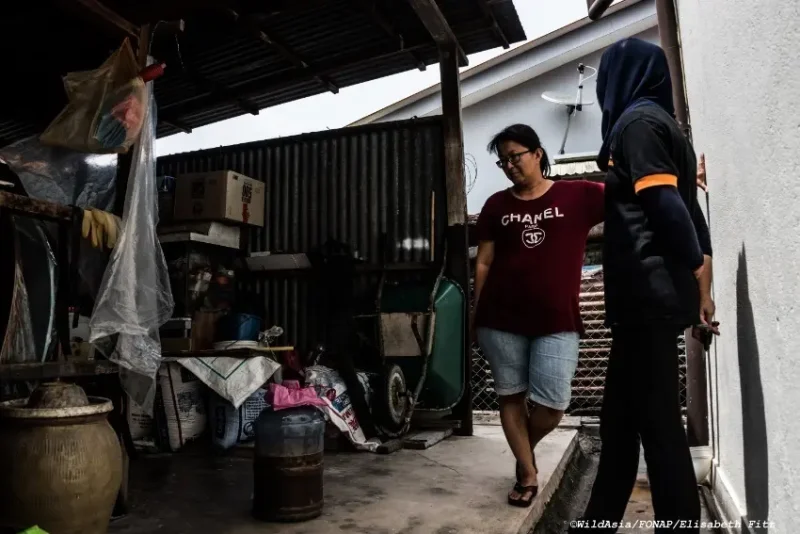
Like the other smallholders in the Perak region, Ms. Tiam primarily has to deal with the bagworm. “It is really hard to control. We have sown grass and use chemicals in cases of very severe infestation.” For fertilization, she is now trying something new, and she always keeps the topic of health in mind. Wild Asia employee Izzaty Ibrahim gave her the idea. -
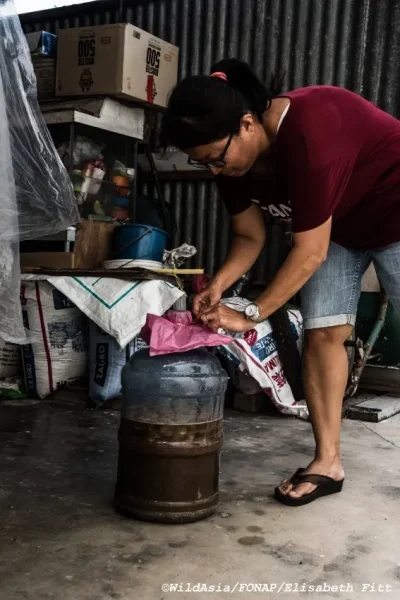
What looks unappetizing at first could further improve Ms. Tiam’s production. And it is 100 percent organic. A compost made from fruit enzymes. “We’ll just try it out starting next month. We can’t go wrong here – it’s organic,” says Ms. Tiam. -
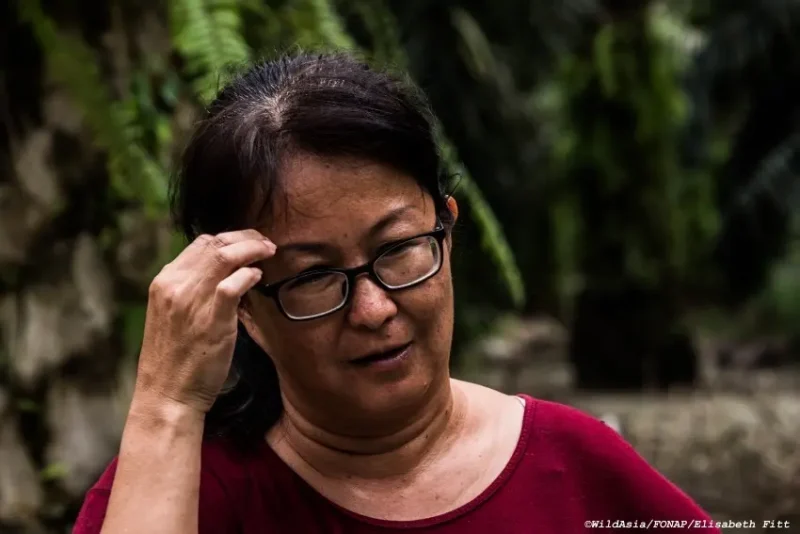
For Tiam Su Goi, a healthy environment is a must. “For me, it’s not okay to use so many chemicals. It’s not primarily about saving costs for me. Rather, we must look after our nature – otherwise it will only get worse. We also bear responsibility for future generations.” -
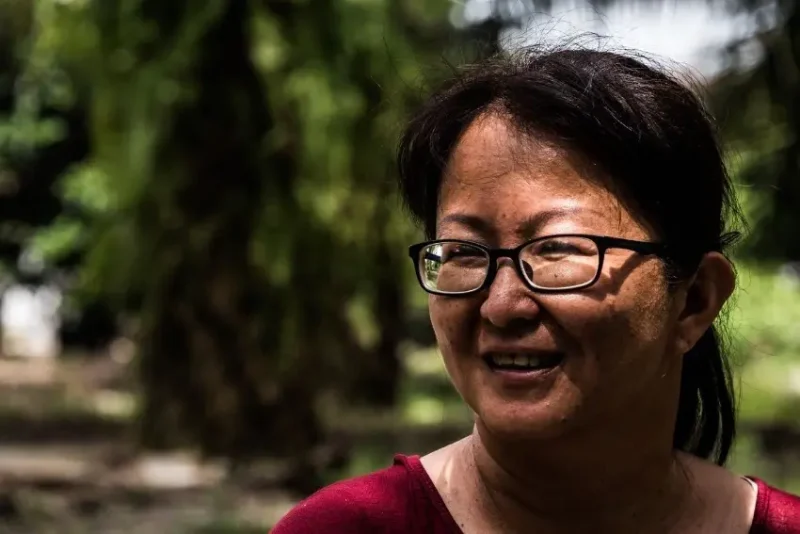
Through Wild Asia, I have received technical support regarding soil care, the application of fertilizers, and the correct handling of chemicals. I have also learned new methods like composting, which I use for my plants around the house, which I think is good!
You are currently viewing a placeholder content from YouTube. To access the actual content, click the button below. Please note that doing so will share data with third-party providers.
More InformationThe Second Phase of Our Pilot Project
Natural Cultivation Methods and Digital Technology
Project Phase II
-
When
December 2019 to March 2021
-
Who
FONAP Cooperation with WWF and Wild Asia (Malaysia)
-
Where
Perak Region/Malaysia
-
What
Promotion of chemical-free production – support for practical demonstration farms
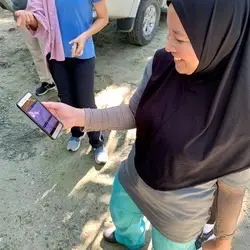
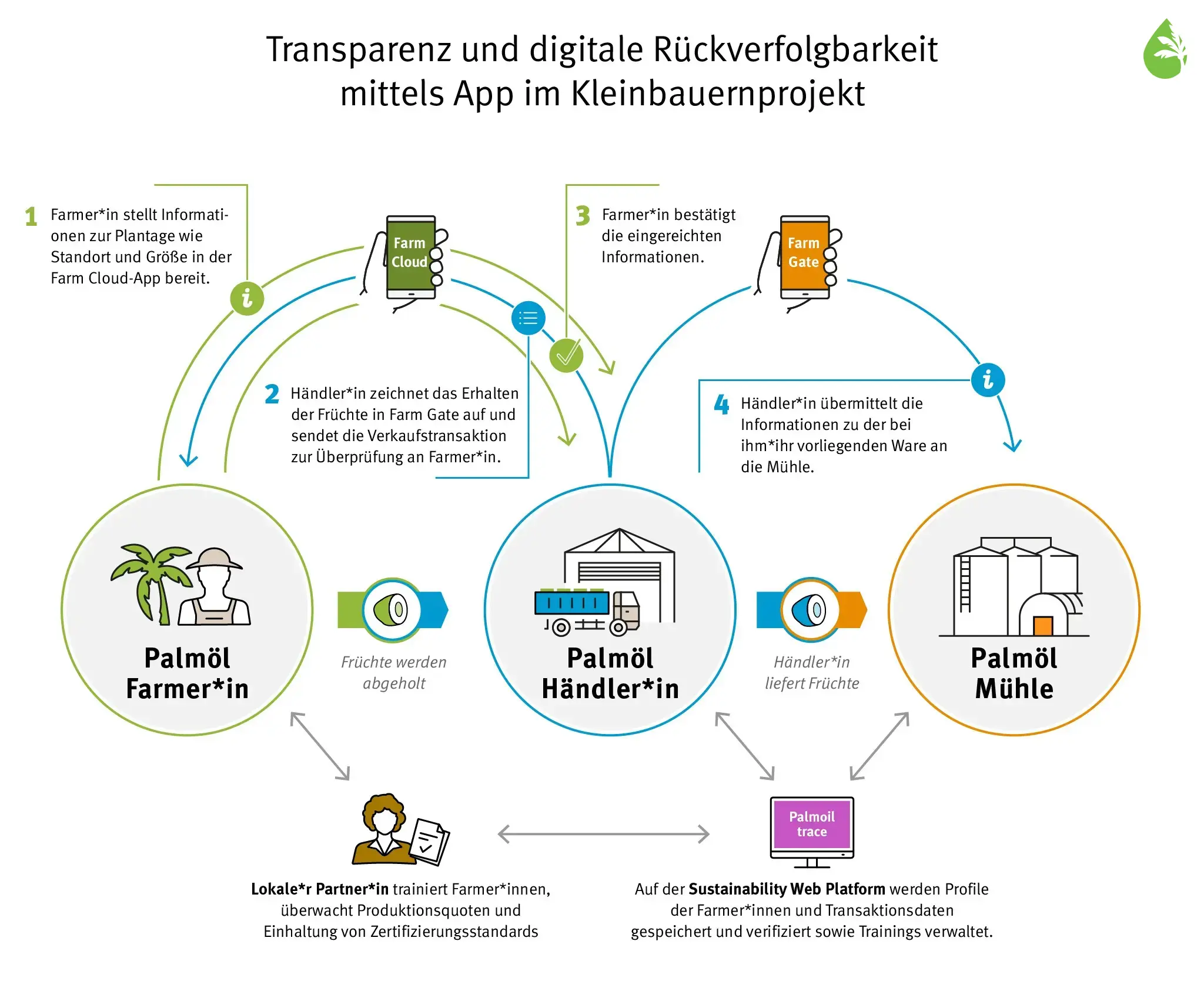
Transparent Supply Chains – PalmoilTrace – FarmGate App
In December 2019, the second phase of the FONAP member project started in the Perak region of Malaysia, again in cooperation with WWF Germany and Wild Asia. The focus was on chemical-free production, training on demonstration farms, and the use of digital tools such as the FarmGate app for traceability. Initial results from phase one showed that soil biodiversity, organic cultivation methods, and crop diversification could increase yields and pave the way for integrated cultivation (e.g., production of organic fertilizer and, if possible, the complete avoidance of chemical-synthetic pesticides).
Cultivation methods with natural enemies
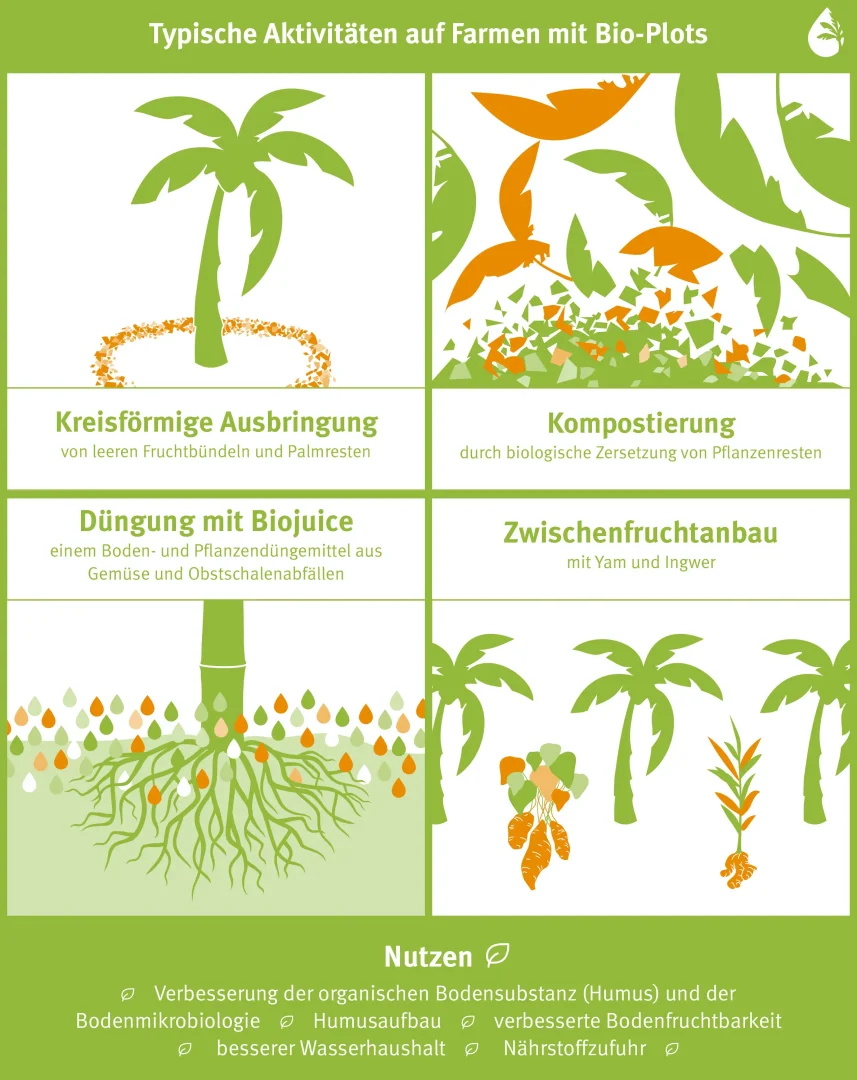
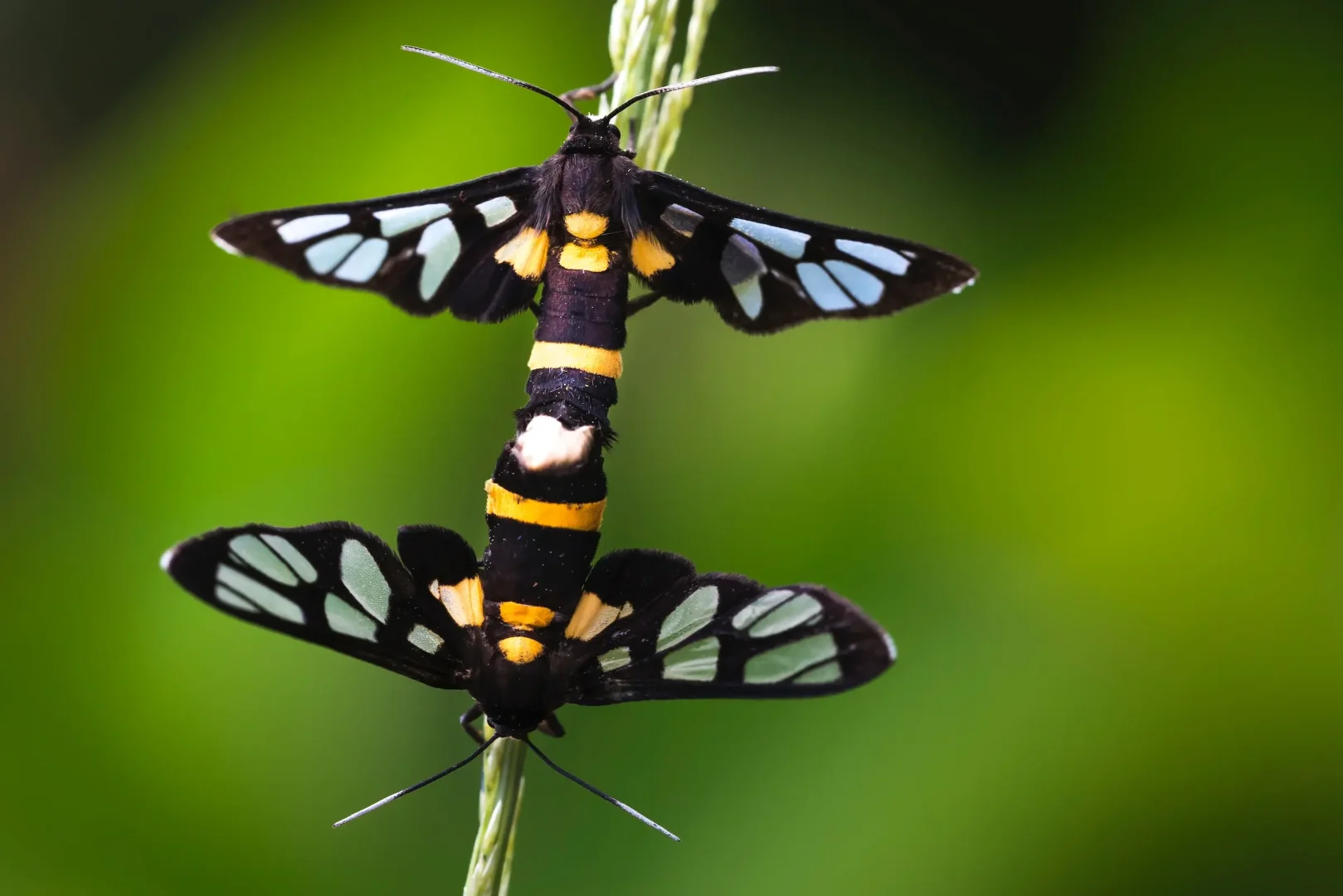
The 2nd phase of our project also built on the experiences of the first round. The smallholders were further trained in the use of alternative cultivation methods such as the use of organic fertilizers. For this purpose, demonstration plots are set up on plantations for training purposes. Instead of pesticides, wasps are now tackling the pests.
INTERVIEW
Project Manager Dr. Reza Azmi (Wild Asia) about our FONAP project
Insights from the 1st Phase – Dr. Reza Azmi – FORUM Sustainable Palm Oil
You are currently viewing a placeholder content from YouTube. To access the actual content, click the button below. Please note that doing so will share data with third-party providers.
More InformationThe Importance of the PalmoilTrace FarmGate App for the Palm Oil Supply Chain
You are currently viewing a placeholder content from YouTube. To access the actual content, click the button below. Please note that doing so will share data with third-party providers.
More InformationDr. Reza Azmi's Expectations for the 2nd Project Phase – FORUM Sustainable Palm Oil
You are currently viewing a placeholder content from YouTube. To access the actual content, click the button below. Please note that doing so will share data with third-party providers.
More Information