

Challenges & Opportunities
Challenges
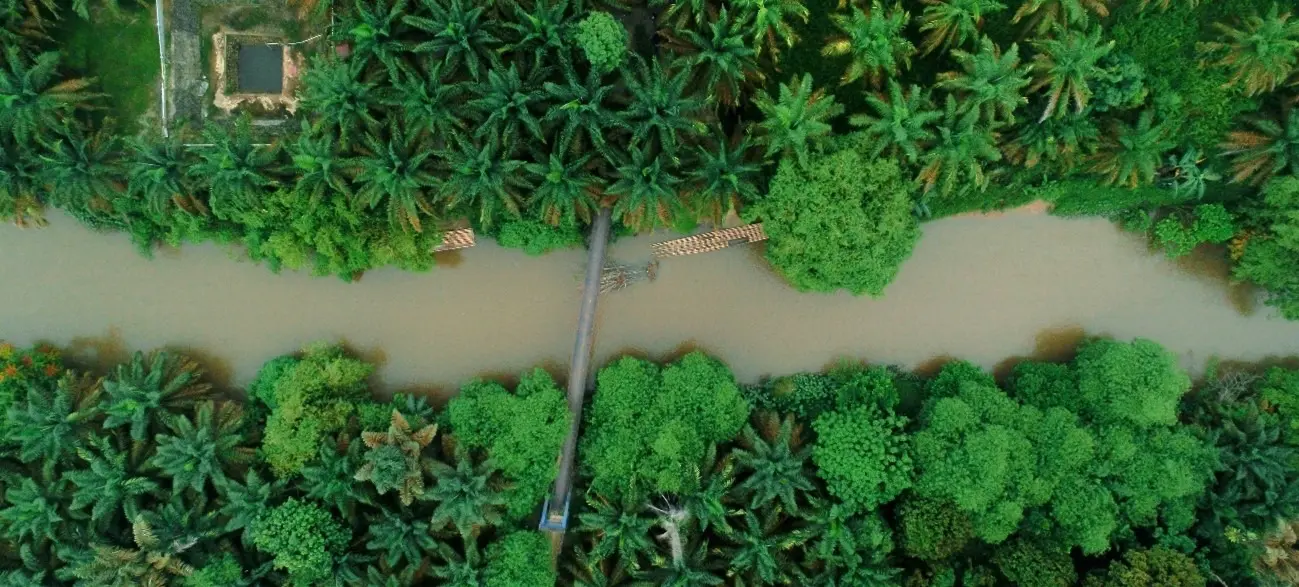
Due to the growing world population, demand for palm oil is also steadily increasing. While 3.62 million hectares of land were used for palm oil production worldwide in 1961, in 2021 it was almost 20 million, and today almost 30 million hectares (2026), with an upward trend. The associated land-use changes, and especially the resulting environmental effects, are therefore much-discussed topics in politics, science, and the public sphere. And indeed, there are clear grounds for criticism of palm oil production: whether rainforest deforestation, CO2 emissions, or human rights violations, the negative impacts of expanding palm oil plantations are almost as diverse as the positive properties of this booming agricultural commodity.
Rainforest Destruction & Slash-and-Burn Clearing
Since oil palms grow exclusively in tropical climates, rainforest is often cleared on a large scale for their cultivation, and greenhouse gas emissions are released through slash-and-burn clearing. Indonesia and Malaysia in particular have suffered major losses of primary forest due to oil palm cultivation. Primary forest clearing increased in both countries for decades. In recent years, however, the area of forest cleared annually has been declining. For Indonesia, this represents an average reduction in primary forest loss of 64 percent when comparing 2017 and 2022, and for Malaysia 57 percent. While these are noteworthy advances, over 0.2 million hectares of primary forest were still cleared in Indonesia in 2022.
Palm oil production thus contributes significantly to species extinction. In addition to the critically endangered orangutan, many other species are affected by the destruction of rainforests. Researchers at Queen Mary University of London were able to demonstrate, using the example of bats, that plantation cultivation has catastrophic consequences due to the constant fragmentation and destruction of tropical primary forests. Specifically, the diversity of animal species, as well as the genetic diversity within a species, are lost in the process. These findings were published in “Science Daily” as early as 2011.

Slash-and-Burn Clearing for Palm Oil
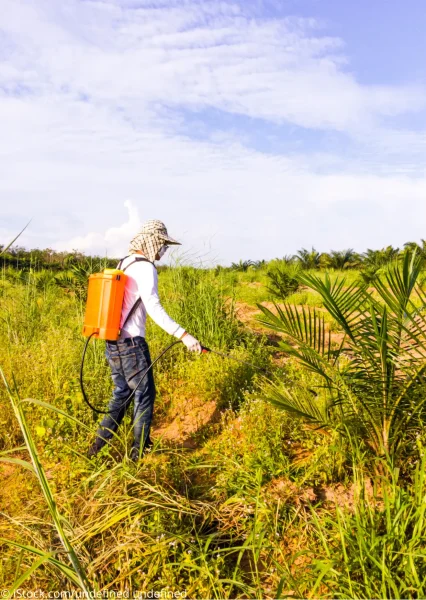
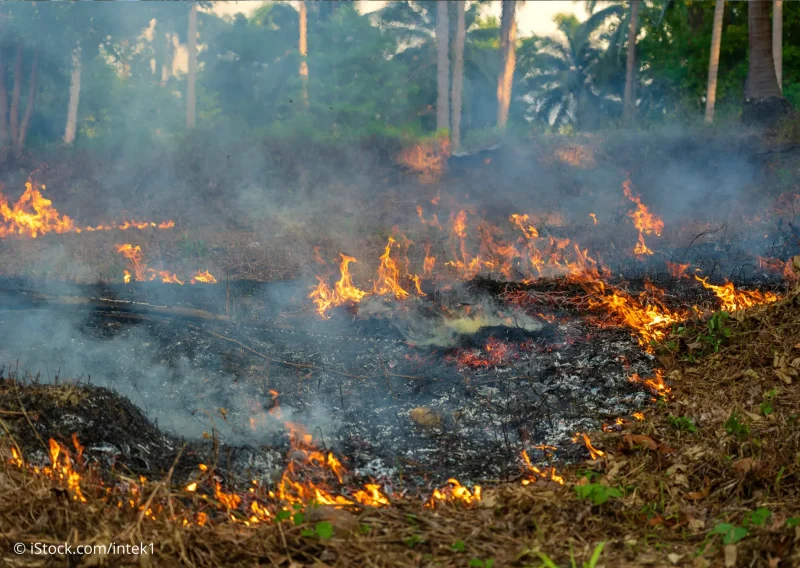
One consequence of rainforest destruction is the increase in carbon dioxide in the atmosphere. To make agricultural land usable for oil palm cultivation, it is often cleared by slash-and-burn methods. In the process, peat soils in particular release stored carbon dioxide in large quantities. This practice has been prohibited in Indonesia since 2019, but tracking such offenses is particularly difficult in remote areas.
Slash-and-burn clearing and the associated air pollution often have a direct impact on the health of people living in the cultivation areas. In 2015, slash-and-burn clearing of rainforests in Indonesia produced such severe smog that warnings had to be issued in Malaysia and Singapore due to hazardous air pollution. In the Thai city of Songkhla, for example, approximately 365 micrograms of particulate matter per cubic meter of air were measured following the fires in November 2015—the EU limit is 50 micrograms.
Human Rights Violations on Plantations
Reports from cultivation areas, particularly in Indonesia, clearly show that oil palm cultivation is often accompanied by poor working conditions, social injustice, land conflicts, and thus massive human rights violations. Plantation workers and their families often live on the oil palm plantations, frequently without contact with life outside the plantation. Indigenous peoples are also often affected, being driven from their lands and deprived of their livelihoods.
National migrant workers face particular disadvantages, falling into economic or legal dependencies. They frequently enter into debt bondage, incurring debts to cover costs from labor recruitment to arrival at the plantation. Violations of women’s rights are also a focus. Oil palm plantations are very extensive, which exposes workers and residents of neighboring villages to an increased risk of sexual violence. Migrant female workers in Malaysia face deportation in the event of pregnancy. They must therefore undergo regular health checks. Should a birth occur, the child receives neither Malaysian citizenship nor that of the parents. The child is additionally denied the right to state services and education (study “Human Rights in the Palm Oil Sector”). It is therefore all the more important to provide children living there with access to education, among other things, and to pay workers minimum wages.
Abandoning Palm Oil—A Solution?
Despite the challenges mentioned, oil palm cultivation is not fundamentally bad. It brings both ecological and economic benefits.
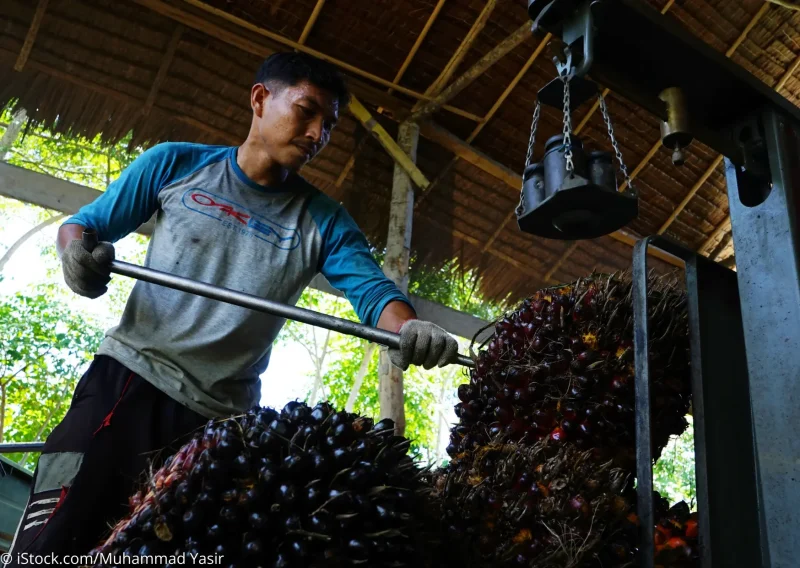
In the producing countries themselves, palm oil production is a significant economic factor. International trade in palm oil is an important source of revenue that can make an enormous contribution to economic growth. Furthermore, the non-mechanized harvesting of palm fruits, which is possible approximately 15 times a year, creates numerous important jobs. These are offered primarily in rural, often structurally weak regions. However, it is also clear that plantation workers must receive a minimum wage and that (inter)national labor law must be observed. Likewise, the inclusion and support of smallholders, who produce approximately 40% of the world’s palm oil, as well as a ban on child labor on plantations, are absolutely necessary.
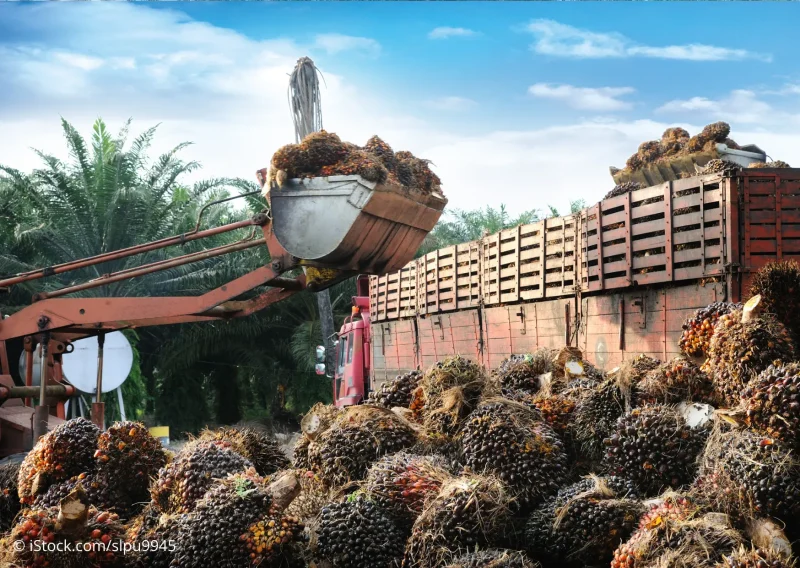
The oil palm has the highest yield of all oil crops. Palm oil thus covers a large portion of global demand for vegetable oil, yet occupies only approximately 5.3 percent of global cultivation areas for vegetable oils with about 29 million hectares of cultivation area. Furthermore, the oil palm is the only crop that produces two different oils of interest to industry: palm oil and palm kernel oil. The oil palm occupies the smallest portion of total cultivation area for global oil and fat production, yet simultaneously represents the largest share of total production at approximately 40 percent of plant-based fats. Sunflower, coconut, or soy—their area yield is on average three times lower than that of palm oil. Replacement with other vegetable oils would therefore not lead to the desired goals, but would merely shift the problem and in some cases even worsen it. If the alternatives are native to regions as sensitive as those where oil palms grow, more rainforest will be cleared for cultivation. This creates the risk of an increase in greenhouse gas emissions as well as greater impairment of biodiversity. Even the most important European vegetable oil, rapeseed oil, could not meet the rising global demand for vegetable oils. Good land productivity is an important prerequisite in view of the growing world population and the economic growth of consumer countries to meet the rising demand for vegetable oils.
More Ecologically and Socially Sustainable Oil Palm Cultivation
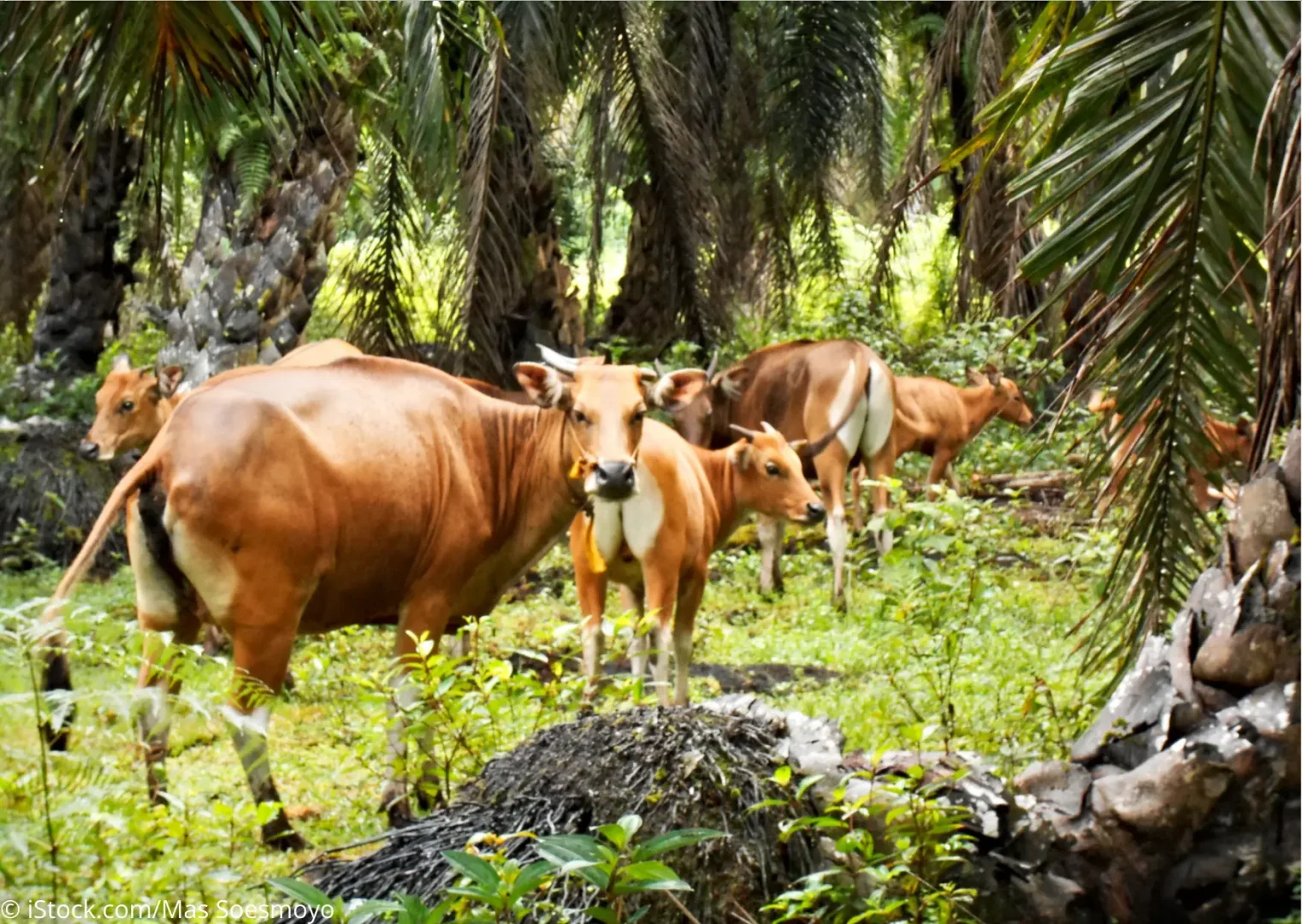
For resilient palm oil production, it is particularly important that the areas used for oil palm cultivation are not converted at the expense of the environment. Compliance with Good Agricultural Practice is one of the pillars of this cultivation. Oil palm cultivation should take place exclusively on fallow land and agriculturally usable land and areas in order to minimize the risk of carbon release. The challenge of such cultivation is to achieve the greatest possible yield while impacting nature as little as possible.
The governments of producing countries play an important role here. They must formulate and enforce appropriate laws that regulate land use. However, producers and consumers along the entire supply chain also bear responsibility. Their duty is to comply with applicable laws, and thus minimum standards, and beyond that to promote sustainable production and fair trade. Certification can play an important role here.
In June 2023, the EU Regulation on Deforestation (EU Deforestation Regulation, EUDR for short) entered into force. This regulation states that certain products may only be offered on the EU market from January 1, 2027, if they were produced without deforestation and forest degradation. To this end, companies must fulfill due diligence obligations. The EUDR applies to products made from palm oil, soy, beef and leather, coffee, natural rubber, and wood.