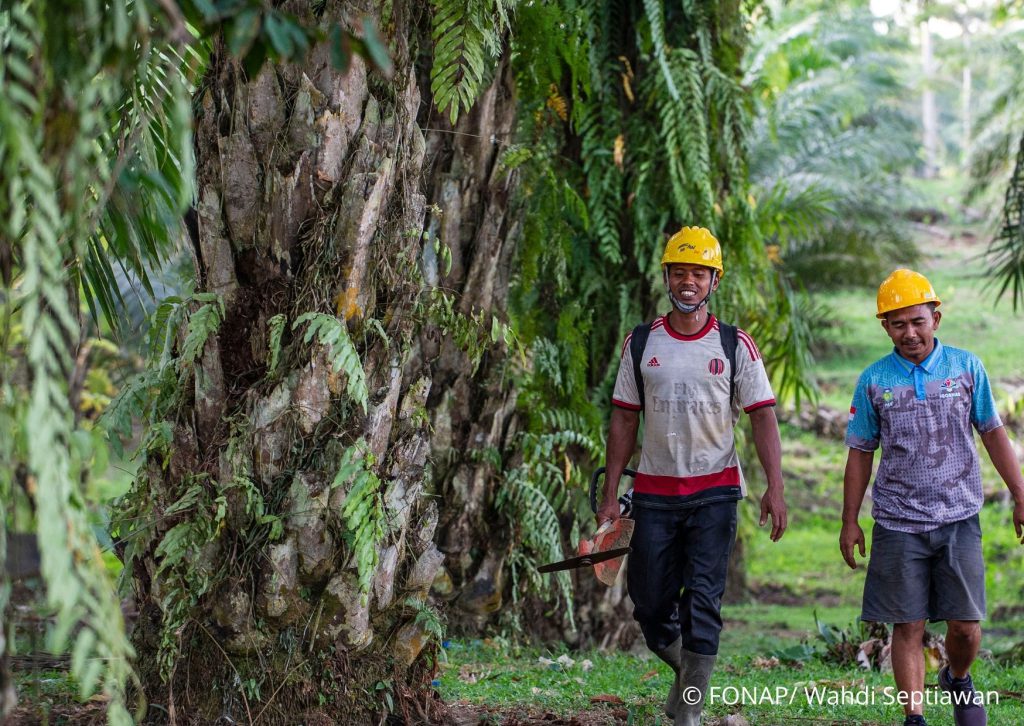

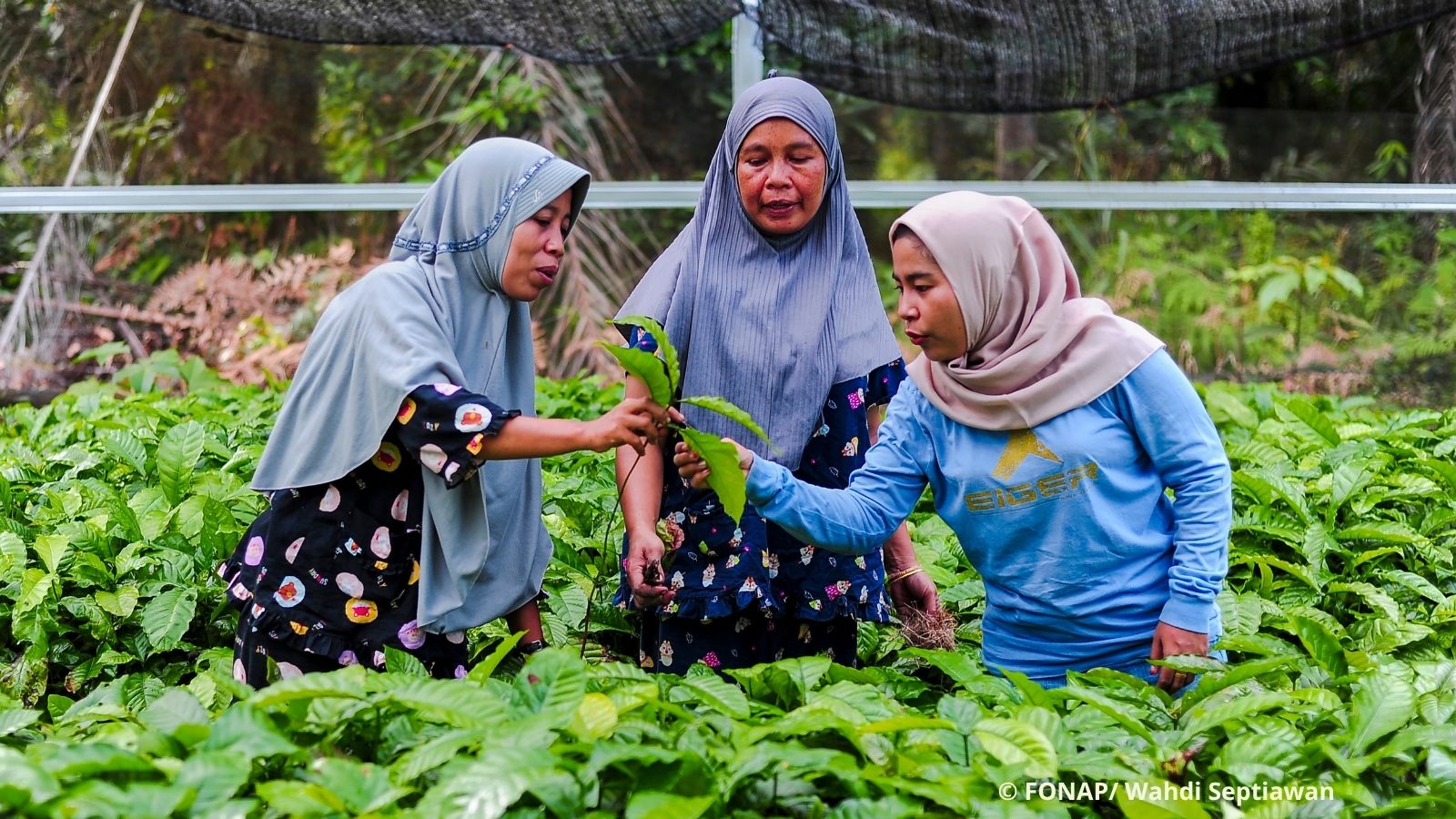
“From sustainable palm oil to sustainable landscapes” – under this title, FONAP launched its cooperation in March 2022 with the Indonesian palm oil forum FORTASBI and the local NGOs CAPPA and Setara Jambi in Jambi, Sumatra. On the ground, the FONAP member project supported small-scale producers in palm oil production in switching to sustainable cultivation methods and contributed to reforestation and water protection. The project region lay in the buffer zone of Bukit Tiga Puluh National Park on Sumatra, an important protected area for threatened species such as the Sumatran orangutan. In September 2024, the project initiated by FONAP was successfully concluded.
Strengthening local communities and protecting waters and landscapes
After the first project phase ended in March 2023, the project moved into a second phase after a transition period in September 2023 with the additional cooperation partner KOLTIVA. As part of the project, FONAP promoted sustainable landscape management through social forestry. On an area of 17 hectares, small-scale producers planted crops that are intended both to contribute to reforestation and to provide economic benefit. These measures aim to improve the income opportunities of the small-scale producers involved in the long term. In the second phase of the project, 107 small-scale producers received training to develop organisational and planning capacities. In total, more than 2,000 coffee and candlenut seedlings as well as around 200 fruit trees were planted as part of the restoration.
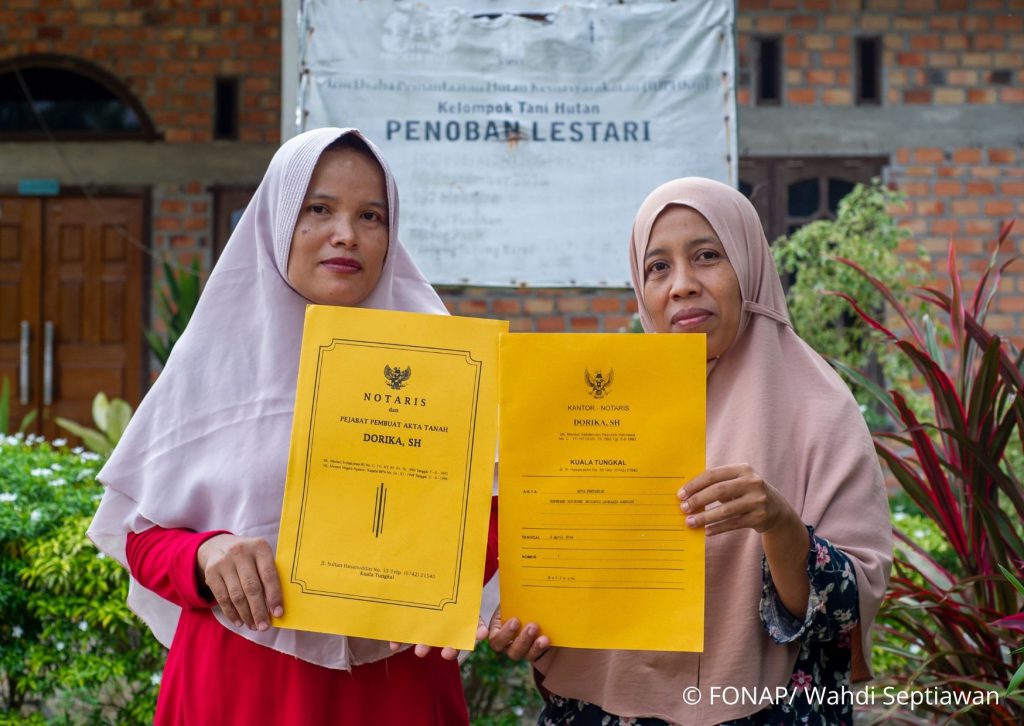
To support women in their gainful employment, three women’s groups were supported during the first project phase in founding and building up nurseries. The plants they raised were used in the project to restore forest and riparian zones and at the same time served as a source of income. A total of 70 women were involved in setting up the nurseries. In April 2024, with the support of the project, the women founded a women-led cooperative, which was strengthened through training and advice in developing its organisational structures.
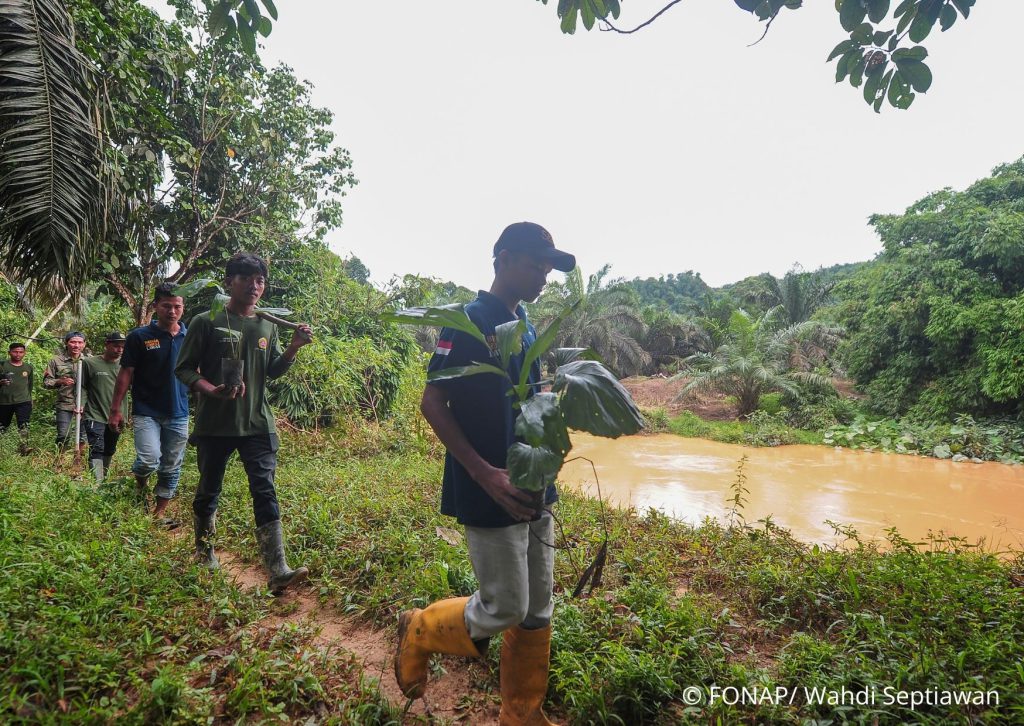
The sustainable management of waters was also a central part of the project. To protect rivers and riparian zones, green buffer strips were created along the Pengabuan River in order to reduce oil palm cultivation up to the shoreline. Using the traditional “Lubuk Larangan” method, village communities regulated fishing in designated protection zones. In the second phase, three further villages committed to this method, and a study on water quality and the effects of “Lubuk Larangan” was successfully carried out. Particular attention was paid to involving young people in the protection measures.
The project also conducted training that introduced small-scale producers to approaches of regenerative agriculture. These included, for example, the production and use of organic fertilisers. In the first phase, 536 small-scale producers from RSPO-certified cooperatives took part, and in the second phase a further 200 participants from the Tebo district. The uptake rate of these practices was 42% at the end of the project.
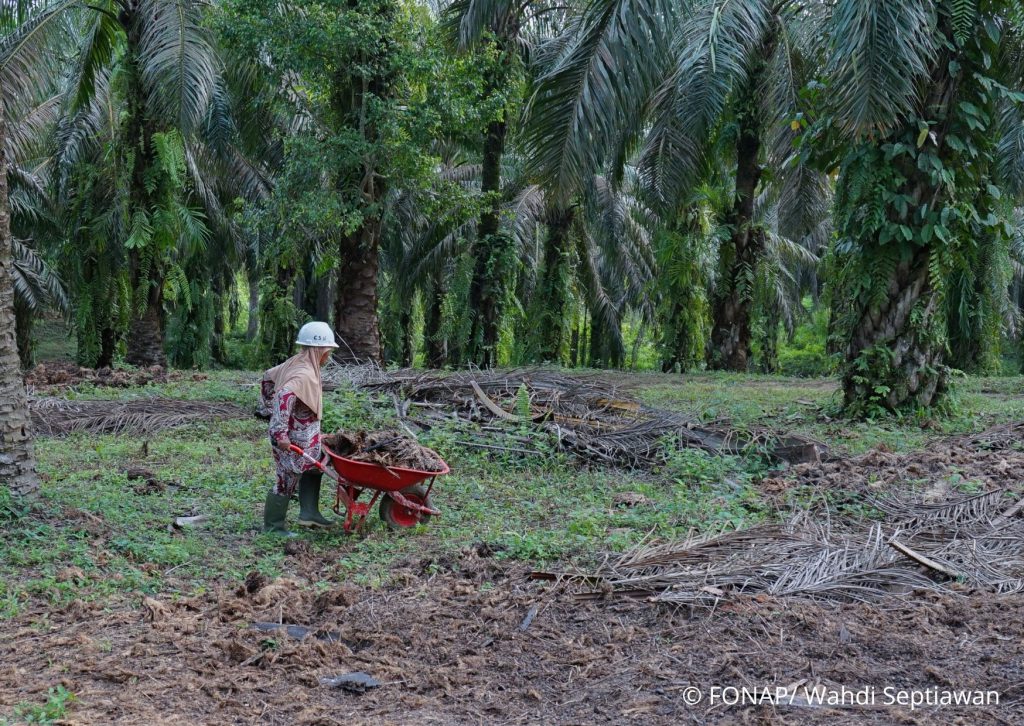
A new focus of the second phase was the collection of GPS and polygon data and profiles of small-scale producers in the project region. For this, the implementing organisations cooperated with the organisation KOLTIVA. Geolocation data improve traceability and are fundamental for certification and international regulations such as the EU regulation on deforestation-free products (EUDR). The project enabled the collection of GPS and polygon data from around 1,350 small-scale producers in two project districts.
Outlook
The project was financed through members’ contributions, which were matched in equal amount by the Federal Ministry for Economic Cooperation and Development (BMZ). With the successful conclusion of the project, FONAP sends a strong signal for sustainable palm oil production and the protection of landscapes in Indonesia. We thank our project partners on the ground for the good cooperation.
In our work for sustainable palm oil supply chains, we place great importance on direct engagement in the producing countries, with a particular focus on small-scale producers. That is why we are continuing our activities beyond this project and already have new initiatives with Wild Asia in Malaysia and beyond in planning, which promote close cooperation with actors at the start of the supply chain in order to achieve long-term, sustainable change. The cooperation with Wild Asia takes FONAP back to a partner with which the multi-stakeholder partnership had already worked successfully from 2018 to 2021 and which, moreover, made central contributions to the transfer of know-how on regenerative practices in the FONAP project in Indonesia.