

Members' project Malaysia 2026
Cooperation with Wild Asia
-
When
April 2025 to March 2027
-
Who
Cooperation with Wild Asia, a social enterprise based in Malaysia
-
Where
Johor & Sabah, Malaysia
Scaling Sustainability in Palm Oil Value Chains:Empowering Small Producers through Inclusive and Nature-positive Palm Oil
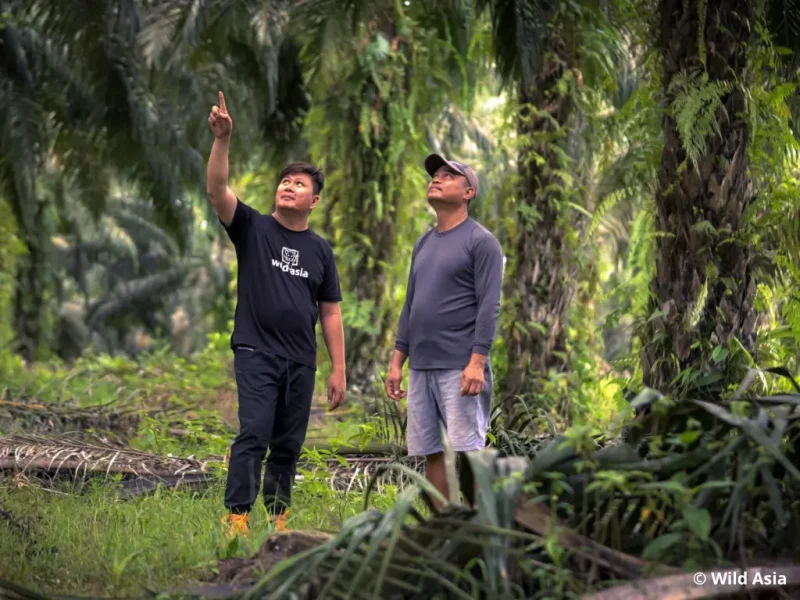
Since April 2025 the FONAP members’ project has been supporting smallholders in Johor, Malaysia, through Wild Asia’s SPIRAL initiative (Small Producer Inclusive Resilience Alliance).
Smallholders account for around 25–30% of palm oil production worldwide. Nevertheless they continue to face barriers to accessing European supply chains. Reasons include high costs of certifications as well as rising requirements for traceability and sustainability. The project takes a bottom-up approach and was developed together with mills, traders and local communities. It combines traceability systems with regenerative agricultural practices that are developed and tested in Living Labs. In this way the project shows how climate action and compliance with sustainability requirements can reinforce one another.
Project goals
-
Strengthen supply chain transparency and support preparation for EUDR requirements
-
Support smallholders through regenerative agriculture and RSPO certification
-
Strengthen carbon reporting and climate action
-
Build partnerships between mills, buyers and smallholders
-
Develop and demonstrate scalable solutions through Living Labs
-
Share knowledge and scale successful approaches
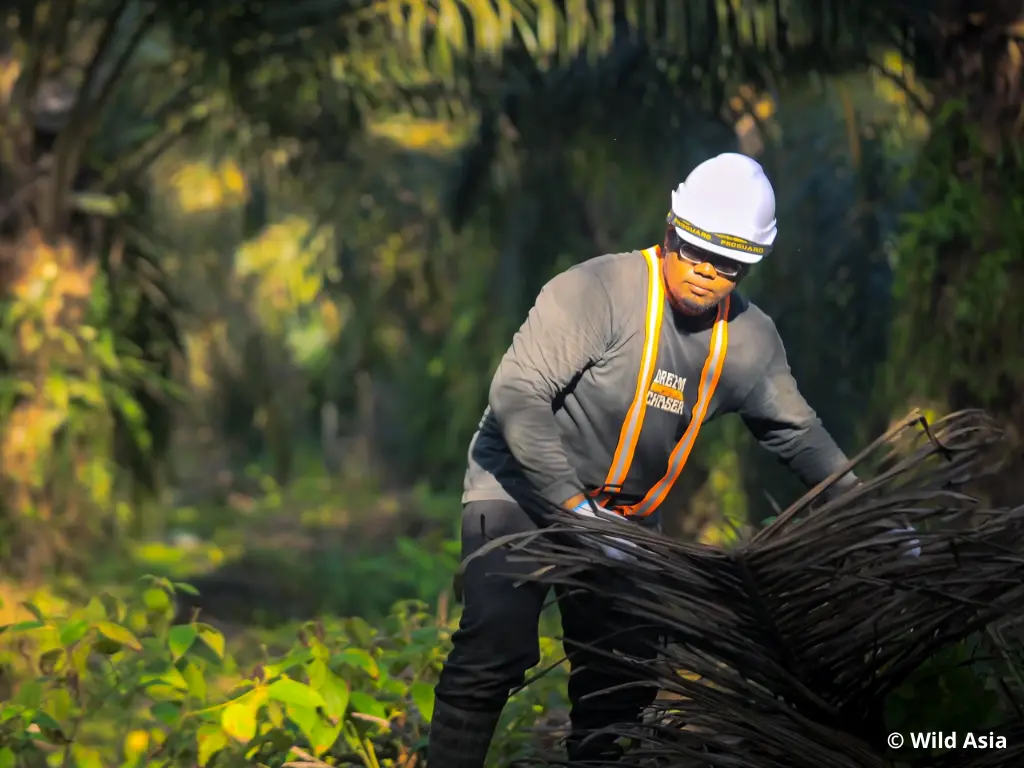
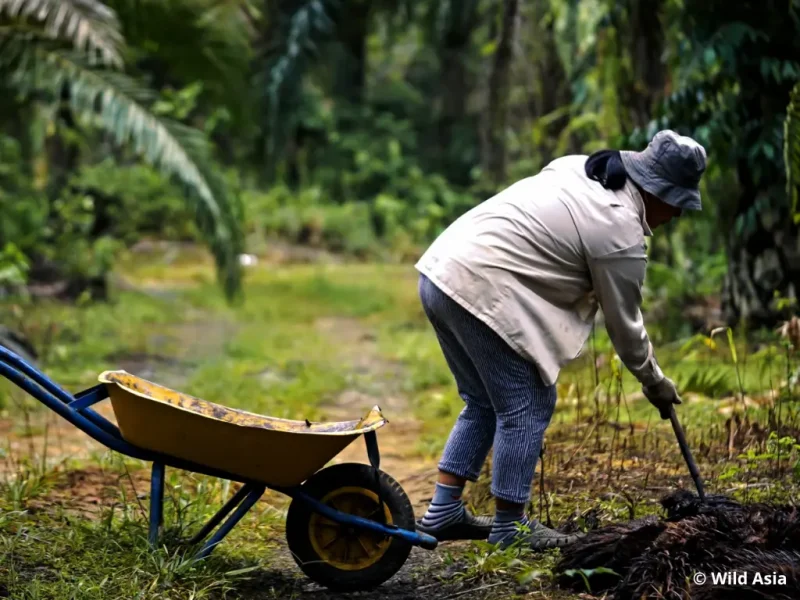
Ölpalmen-Kleinbauer stapelt Palmwedel als Teil regenerativer Anbaumethoden im WAGS BIO-Programm von Wild Asia.
Project approach
The project is implemented by Wild Asia and builds on two complementary approaches:
SPIRAL (Small Producer Inclusive Resilience Alliance) brings together mills, traders, buyers and smallholders to strengthen cooperation, improve market access and build resilient, lower-carbon supply chains.
The Wild Asia Group Scheme (WAGS) supports smallholders in obtaining RSPO certification, improves traceability and promotes more responsible cultivation methods. The newly certified producers were added to Wild Asia’s existing network, which now covers around 41,000 hectares in Malaysia and Thailand.
Certified palm oil meets a key market demand: it increases the availability of more environmentally and socially responsible palm oil for palm oil mills as well as the availability of certified produce from smallholders for RSPO-certified mills.
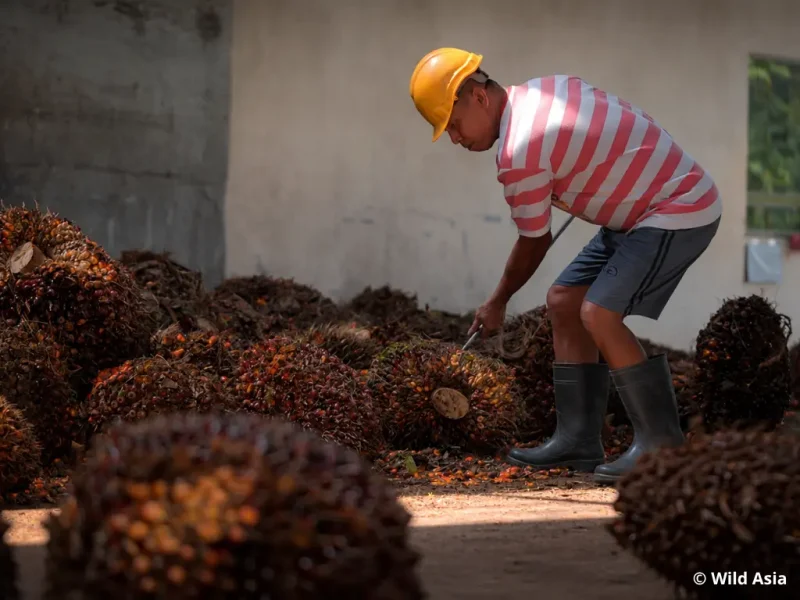
RSPO-certified palm oil mills form the central starting point for the physical supply chain of more environmentally and socially responsible palm oil. Certification ensures that the processed oil palm fruit comes from legal, deforestation-free and socially responsible cultivation.
Impact so far
Supply chain
-
Number of mills participating in WAGS: 3 → 4
-
Number of participating traders: 3 → 7
-
Number of WAGS members: 396 → 441
Smallholders
-
Area under responsible management: 1,692 → 2,140 ha
-
Number of women smallholders increased by more than 12%
-
Number of indigenous smallholders: 0 → 27
Regenerative agriculture
-
Five demonstration plots established
-
One Community-Based Transformation Unit established
-
Three BIO seminars held
Partnerships and knowledge transfer
-
Three SPIRAL events held
-
Knowledge exchange with GIZ-GRASS Indonesia in a training-of-trainers format on regenerative agriculture in oil palm cultivation, presenting Wild Asia’s WAGS BIO methodology
Why regenerative agriculture?
Wild Asia’s regenerative agriculture programme (WAGS BIO) focuses on improving soil health through the complete elimination of agrochemicals, composting, the use of biochar and the use of organic residues.
These practices reduce production costs, improve farm profitability and help agricultural land to develop step by step from net CO₂ emitters into carbon sinks, meaning that on balance they sequester more carbon than they emit.
Beyond reducing emissions, regenerative agriculture restores ecosystems, strengthens rural livelihoods and contributes to creating climate-resilient palm oil supply chains.
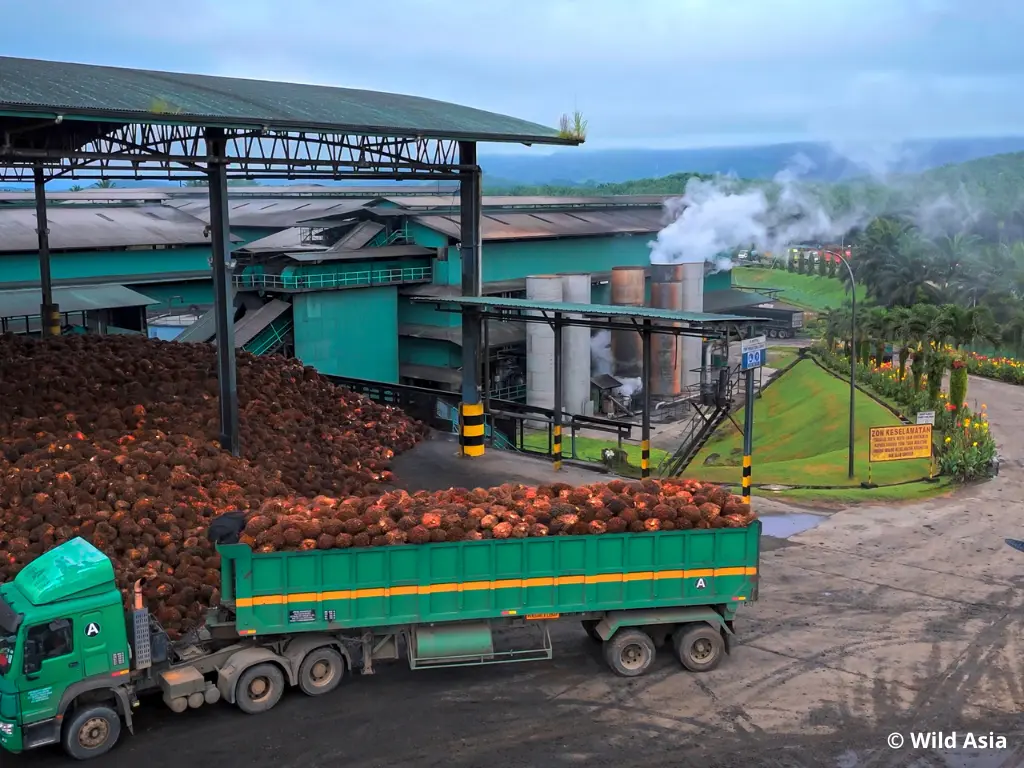
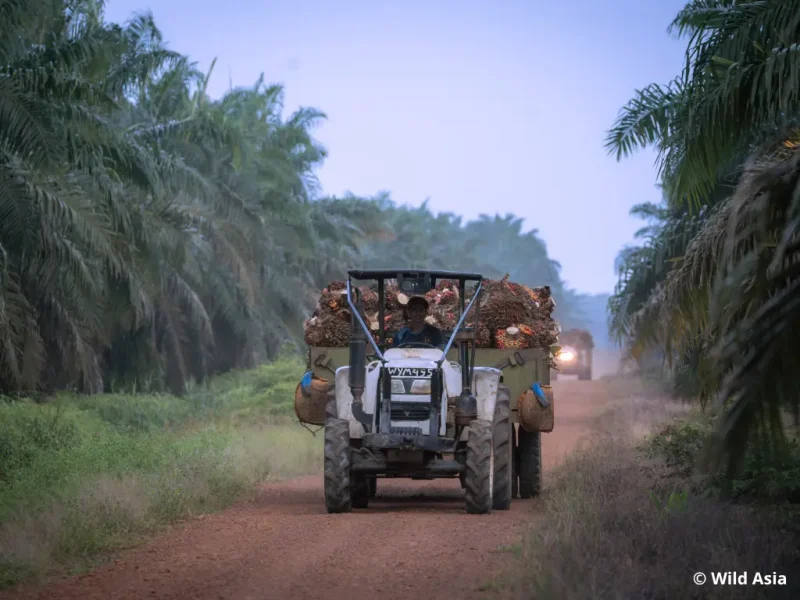
SPIRAL-Mühle in Johor
Partnership with mills
Long-term impact for smallholders requires more than short-term support – it needs systemic change. The project therefore strengthens mills in taking an active role in carbon reporting, reducing environmental impacts and integrating regenerative practices such as organic fertilisation, erosion control, integrated pest management and the protection of biodiversity areas.
As central actors in the supply chain, mills can improve the inclusion of smallholders, increase transparency and promote lower-carbon practices. The carbon reporting tools developed by Wild Asia help mills to better understand and improve their climate performance while also strengthening their market position.
Scaling impact
To implement successful approaches more widely, the project will not only generate technical insights but also translate them into accessible, practice-oriented knowledge for the entire sector.
Wild Asia will produce a public results report as well as communication materials, including a video documentary series and digital content. These summarise the key insights and experiences and show how business engagement can drive inclusive and lower-carbon transformations.
Through SPIRAL, buyers, mills and producers jointly develop practical solutions – such as the WAGS APP – that increase transparency*, strengthen confidence in sourcing from smallholder supply chains, promote demand for more environmentally and socially responsible palm oil and support compliance with future market requirements.
*The WAGS APP connects farmers, advisory professionals and actors in the palm oil value chain in a digital network. The app makes it easier to capture important farm data, for example on legal requirements, production and sustainability, and prepares this information so that concrete recommendations for practice emerge.
Building on earlier FONAP members' projects
This project builds directly on two earlier FONAP members’ projects that were also implemented by Wild Asia:
Impact of the FONAP Add-on Criteria on Small Producers in Malaysia
From Sustainable Palm Oil to Sustainable Landscapes (together with FORTASBI)
The insights from these projects on chemical-free production, soil health and landscape approaches today form the basis for scaling regenerative agriculture, climate action and resilient supply chains in Johor.
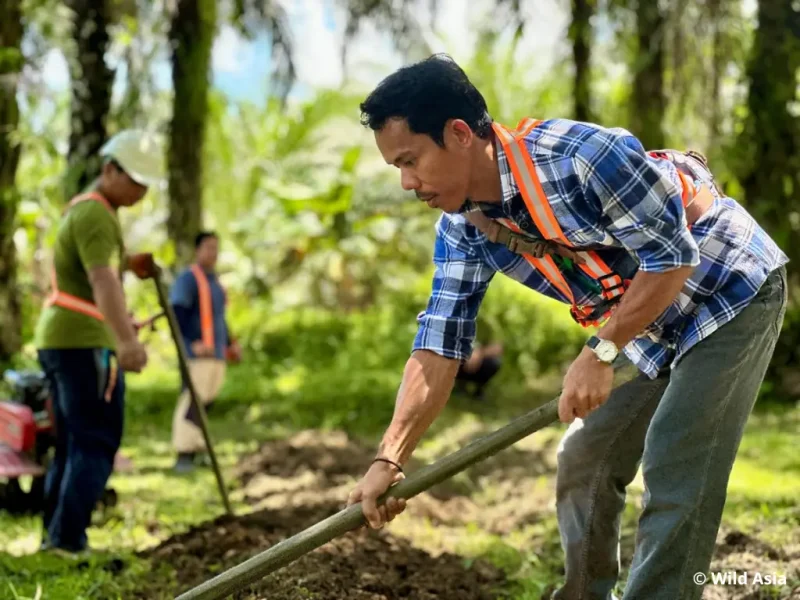
The project is planned as a three-year undertaking.