


About palm oil
What is palm oil
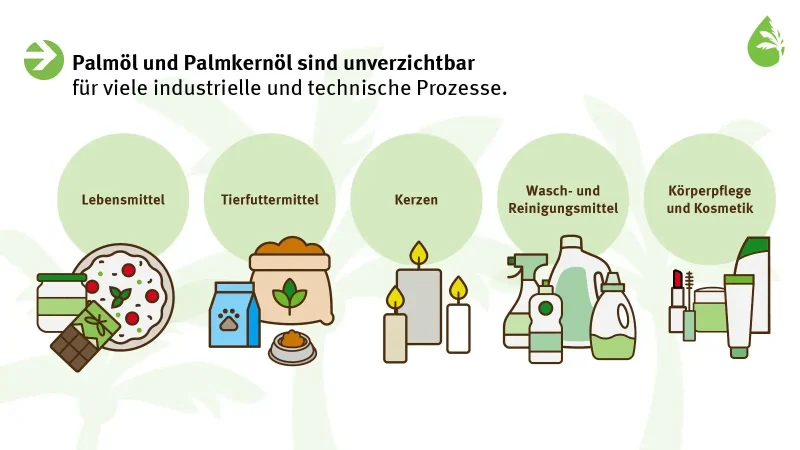
Palm oil is now an integral part of everyday life: according to estimates by the WWF, around 50 percent of all supermarket products contain palm oil – from detergent and lipstick to ice cream and processed meats. A large share of globally produced palm oil is also used as biofuel or animal feed.
The oil palm (Elaeis guineensis), originally native to West Africa, is now cultivated in almost all tropical regions of the world. According to the United States Department of Agriculture (2023), around 78 million tonnes of palm oil were produced worldwide in 2022. The main growing regions are Indonesia and Malaysia, which produce around 65 million tonnes of palm oil – about 83 percent of global output. In Indonesia alone, oil palms grow on nearly 14 million hectares – an area more than three times the size of Switzerland (IndexMundi, 2023). Their spread is also increasing in South America and Africa. Indonesia and Malaysia are also the leading export countries worldwide, with 57 and 32 percent respectively. After India (19 percent) and China (15 percent), the European Union is the world’s third-largest import market for palm oil, with 10 percent and 4.8 million tonnes (IndexMundi 2023). The largest volumes of palm oil were consumed in 2021/22 by Indonesia (18.9 million tonnes), India (8.35 million tonnes), China (5.05 million tonnes) and the EU (5.75 million tonnes). Globally, 65 percent of palm oil is used in the food industry and 31 percent in industry. This includes biodiesel and cosmetics, among other uses.
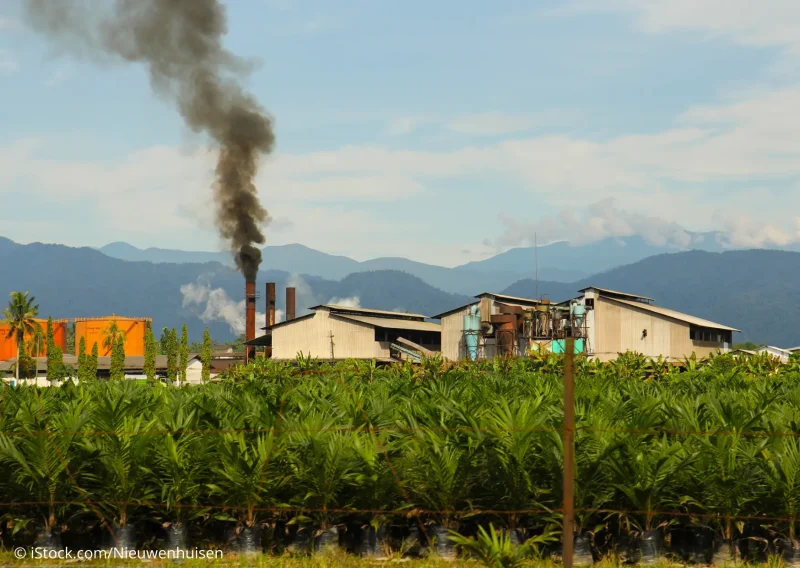
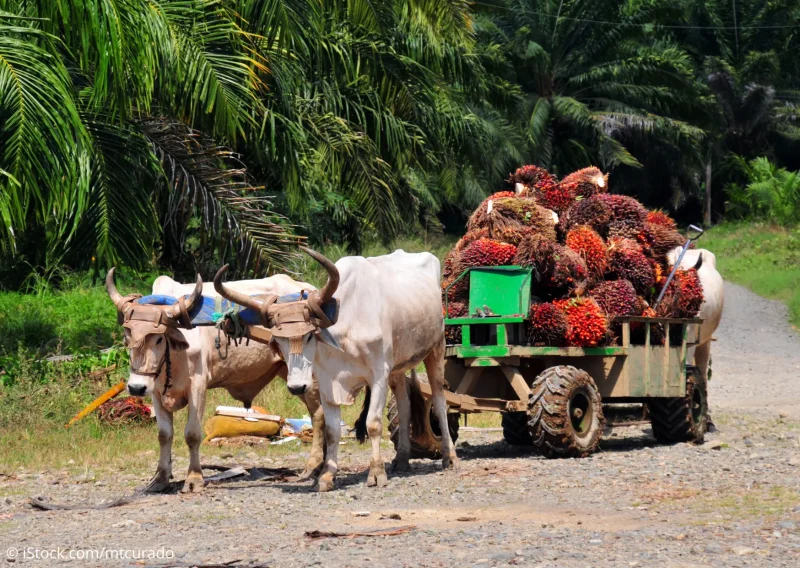
Fruit
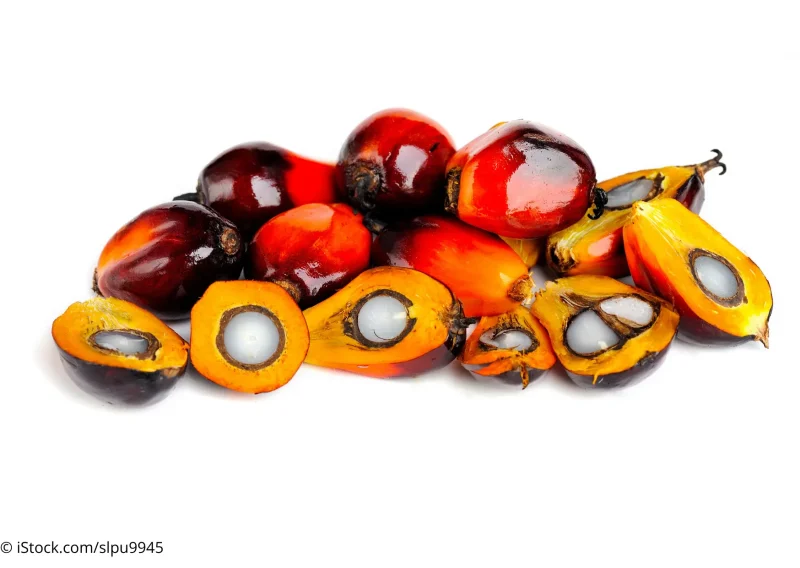
The fruit of the oil palm resembles an olive: it has a hard stone and a fleshy, creamy pulp. Its high beta-carotene content gives the palm fruit its reddish colour. This colour is removed during refining. With a total fat content of 45 to 60 percent, the palm fruit is high in fat. Valuable oils are obtained from both the pulp and the kernel of the oil palm fruit: palm oil from the pulp and solid palm kernel oil from the kernels. Fruit and kernels are, however, processed separately.
Palm oil
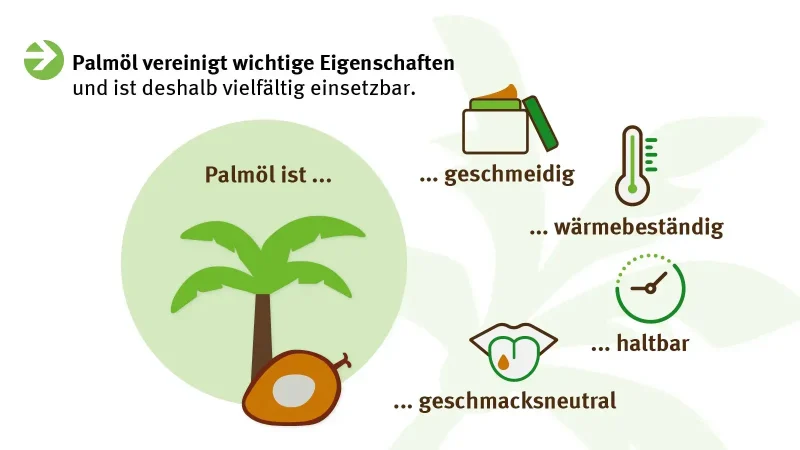
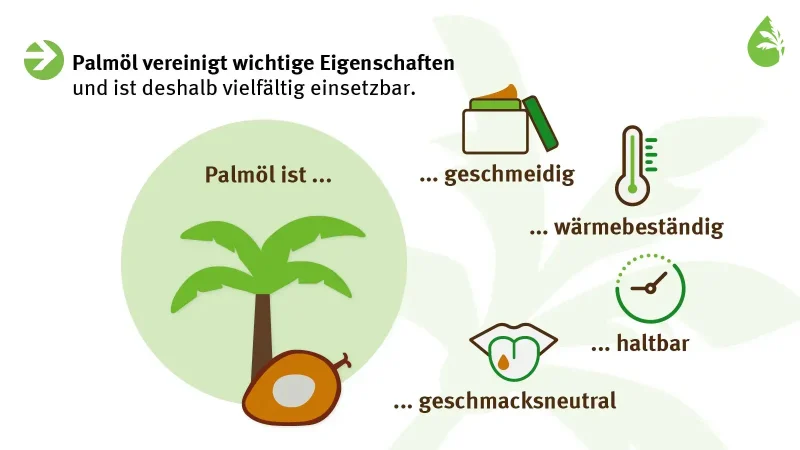
Palm oil is the most widely used vegetable oil in the world. It is obtained from the yellowish to orange-coloured pulp. Shortly before harvest, the oil content of the fruit is at its highest: between 45 and 50 percent. After harvest, the ripe fruit is sterilised to deactivate enzymes and then pressed. This produces crude palm oil (Crude Palm Oil, CPO). Palm oil is flavour-neutral and heat-stable, making it well suited to frying, baking and deep-frying. This is done traditionally in Indonesia and West African countries, among others. Because of its high energy content, it is also suitable as a fuel. Palm oil is also used to make candles, cosmetics and detergents. Because of these unique natural properties, palm oil is therefore difficult to replace with other raw materials.
Palm kernel oil
Although they are obtained from the same fruit, palm oil and palm kernel oil have very different compositions. To produce palm kernel oil, the kernels are dried, in some cases milled, and then pressed. Like coconut oil, palm kernel oil belongs to the lauric oils, containing up to 80% of the saturated fatty acid lauric acid in bound form. At room temperature, palm kernel fat is solid and does not need to be chemically hardened. This makes it particularly spreadable. Because of its consistency, palm kernel oil is used above all in the confectionery industry. Its properties as a carrier for flavours and vitamins, which cannot be introduced into foods without palm kernel oil, are highly valued. It is also in strong demand from the cosmetics and detergent industries because of its special properties, which among other vegetable oils are found only in coconut oil. Detergent-active substances obtained from palm kernel oil are used as so-called surfactants in shampoos, washing agents and cleaning products. Around 8.7 million tonnes of palm kernel oil were produced worldwide in 2019. About eight percent of globally traded palm kernel oil ends up in Germany. In 2021/22, around 20.1 million tonnes of palm kernel oil were processed worldwide.
Derivatives
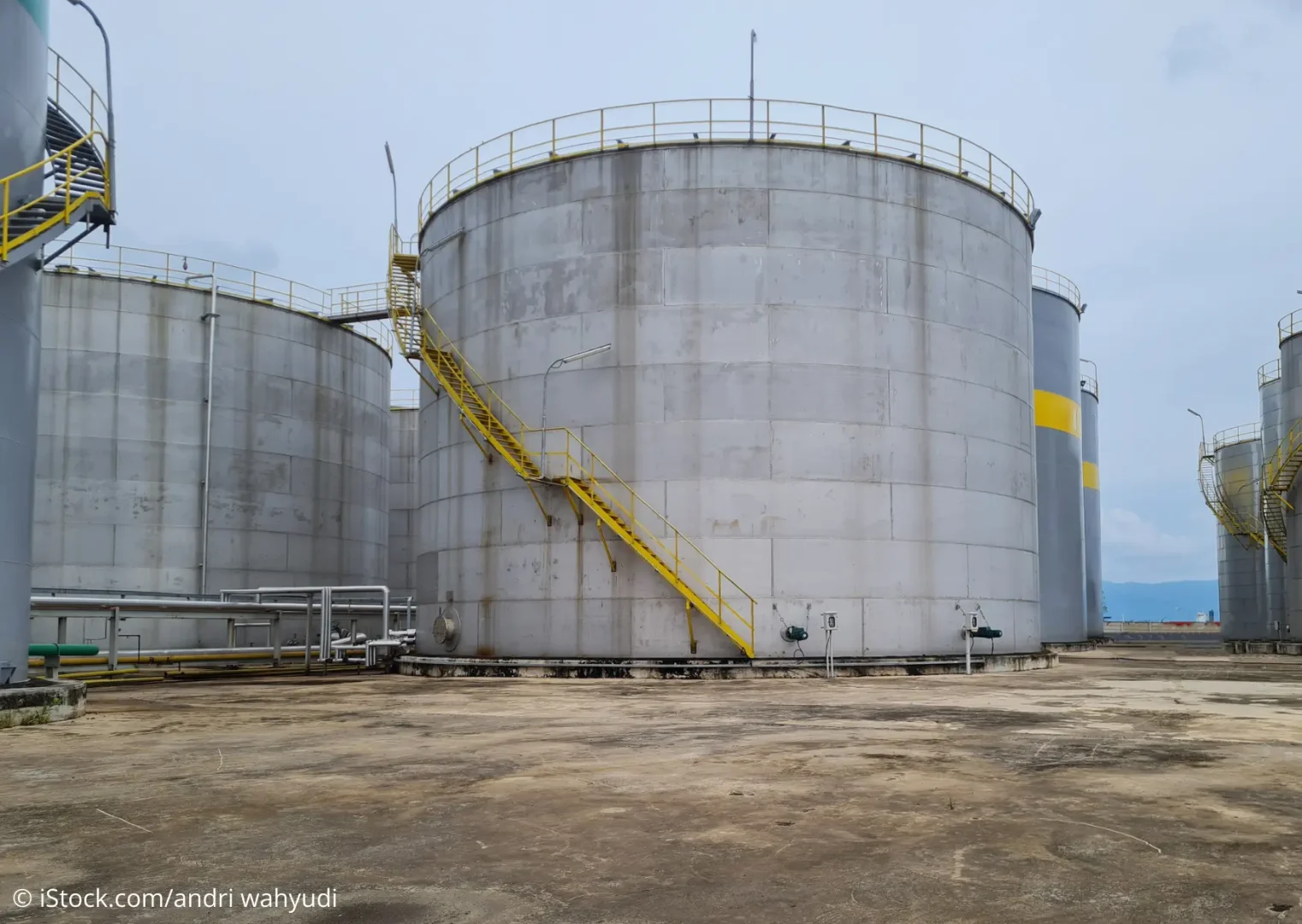
Palm oil or palm kernel oil can be modified through complex chemical conversion processes. This produces so-called derivatives, which are used for example as surfactants or emulsifiers in cosmetics and cleaning products. Emulsifiers make it possible to mix two liquids that do not normally mix, such as oil and water. Surfactants are detergent-active substances. Derivatives from palm oil and palm kernel oil are standard market ingredients for which there are currently few usable alternatives with comparable properties.
Plant
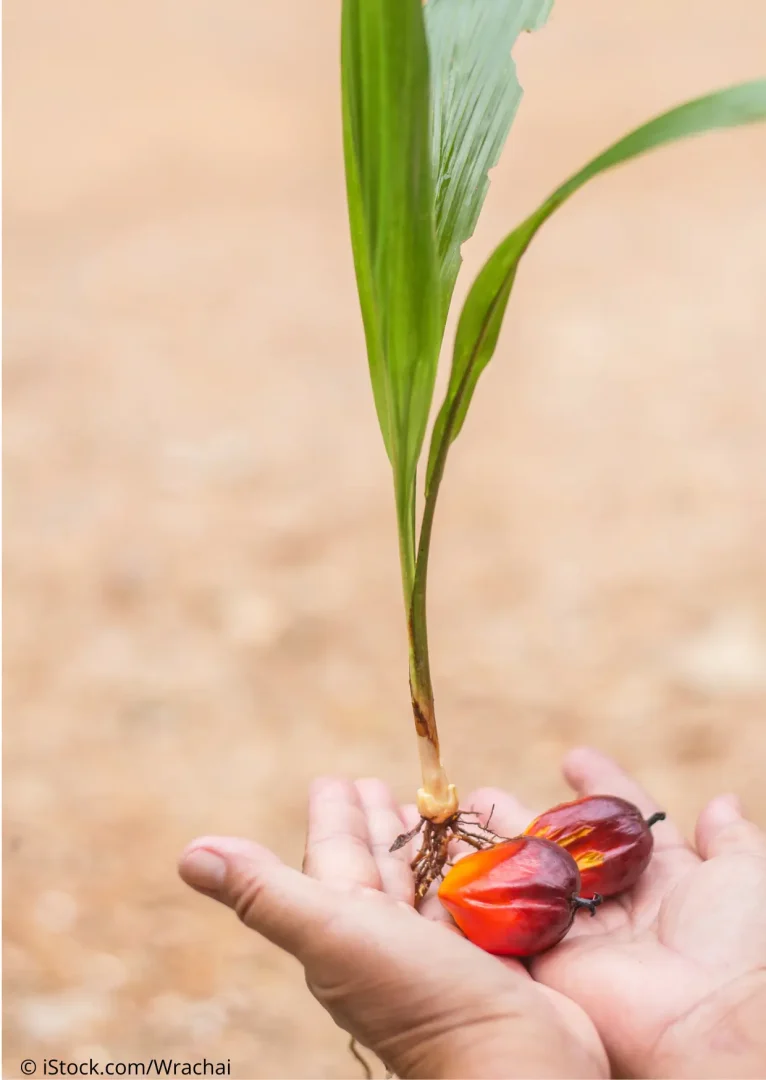
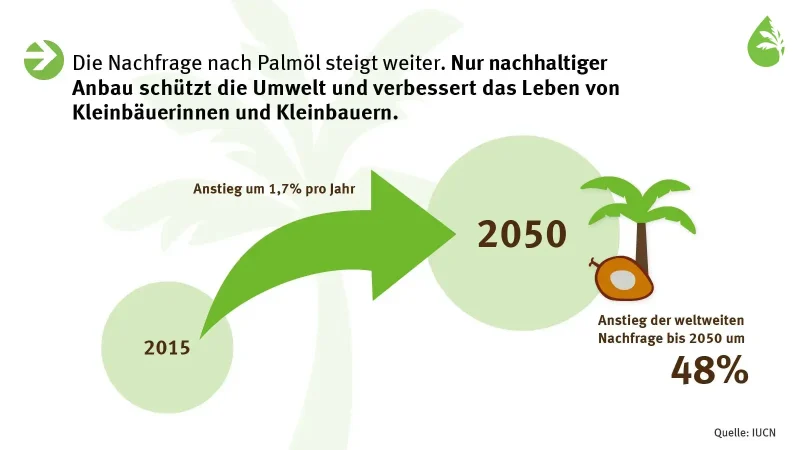
Up to 30 metres tall, the oil palm is a versatile plant. The palm becomes commercially usable about three to five years after planting. From the third year of life, fruit forms in the leaf axils of the palm; the fruit looks like bunches and consists of many individual fruits. After about four to six years the yield stabilises; only from the 21st year does production slowly decline. The old palms are then replaced with new ones. An adult oil palm produces fruit bunches of more than 20 kg around 15 times a year, growing in large, dense fruit bunches. The oil crop is robust and not very susceptible to pests. Demand for palm oil is high. This can be attributed, among other things, to the steadily growing population and its rising demand for processed foods.
Yield
It is also particularly popular because, at an average of 3.25 tonnes per hectare (t/ha), the oil palm has by far the highest yield of all oil crops. Of all oil fruits, the oil palm occupies the smallest share, about 9 percent, of the total cultivation area for global oil and fat production. At the same time, however, it accounts for about 40 percent of total production. Sunflower, coconut or soya – their yield per area is on average three times lower than that of palm oil.
Palm oil in Germany
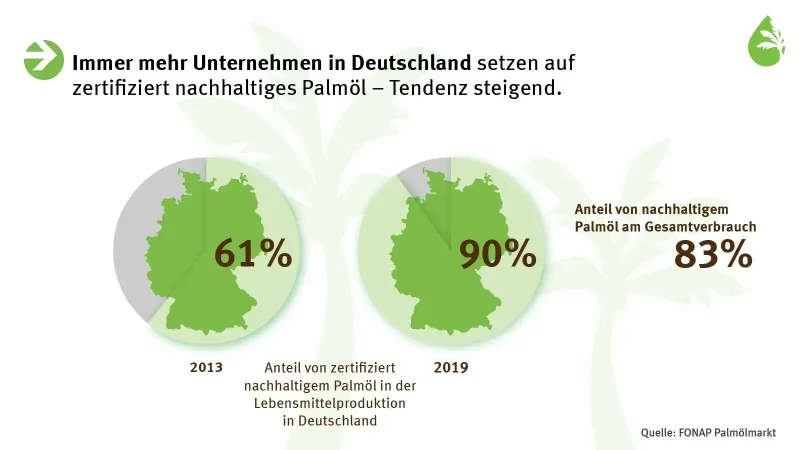
Our last analysis of the palm oil sector in Germany for 2019 showed that of the 1.26 million tonnes of palm oil consumed in Germany, more than 1 million tonnes were certified. The largest share of palm oil consumption, 726,397 tonnes, was in energy production, and there especially in the transport sector. Since January 2023, the blending of palm oil in Germany is no longer counted towards the greenhouse gas reduction quota. The raw material is therefore hardly used any longer for biodiesel production. EU-wide, the use of palm oil in the fuel sector will be phased out by 2030 at the latest.